Article
Shradha Kochhar
28/09/2026
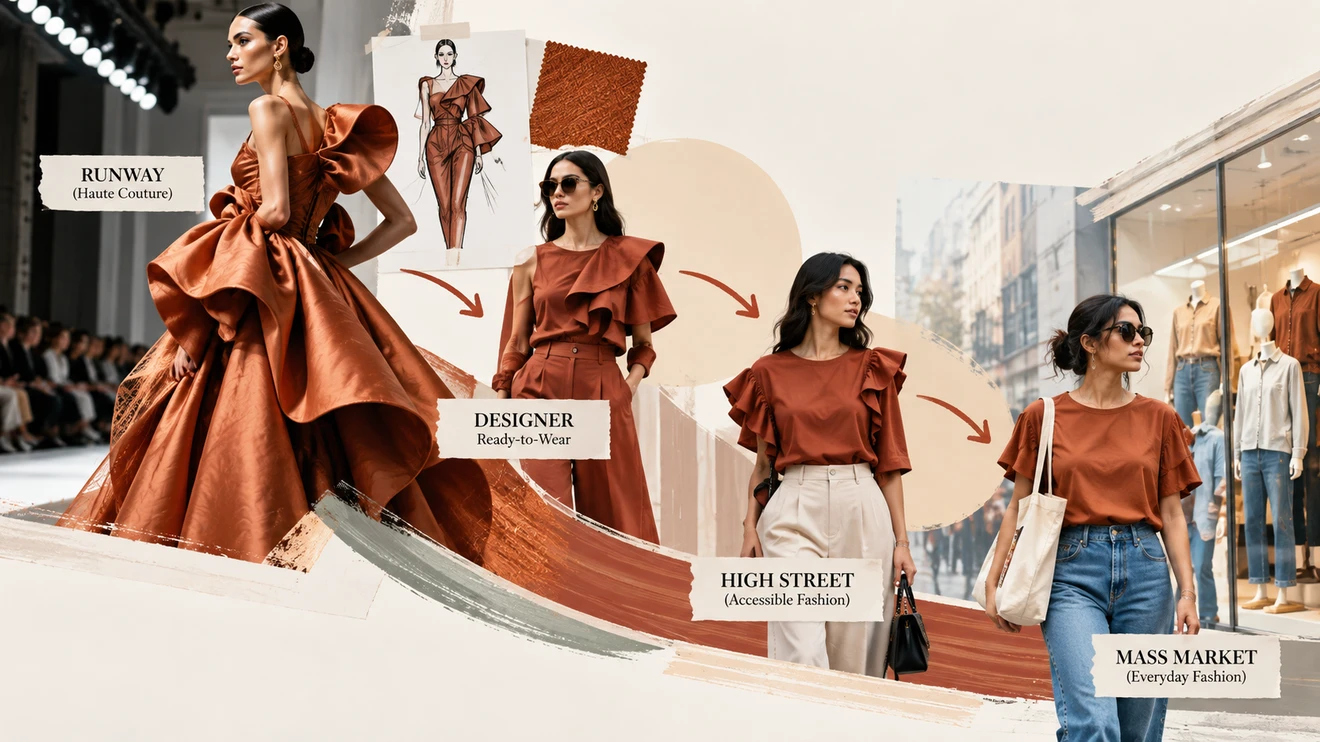
The article delves into fashion’s trickle-down phenomenon, explaining how luxury trends influence mass-market fashion. It explores the journey of style elements from high-fashion runways to everyday wear, analyzing the cultural, economic, and social factors that drive this process. The piece examines real-world examples and the evolution of this theory in today’s fast-fashion era.
Table of contents
- Trickle-Down Theory’s Impact on the Fashion Design Industry
- Criticisms of Trickle-Down Fashion
- Drivers of the Trickle-Down Effect: How Fashion Communication Shapes Consumer Desire
- Impact on Mainstream Styles and Consumer Behavior
- The Evolution of Consumer Aspirations
- Technological Advancements and the Trickle-Down Effect
- Trickle-Down Is Only One of Three Models
- Does Trickle-Down Still Hold in 2026?
- How Trend Diffusion Works in India
- Why This Matters if You Study Fashion
- Challenging the Trickle-Down Paradigm
- Frequently Asked Questions
The film “The Devil Wears Prada” offers a glimpse into the concept of trickle-down theory in fashion. In a now-iconic scene, Miranda Priestly (Meryl Streep) dissects the journey of a seemingly insignificant detail – a cerulean sweater. She reveals how high-end designers like Oscar de la Renta and Yves Saint Laurent establish trends, in this case, the colour cerulean. These trends are then adapted and disseminated by other designers, eventually reaching mainstream retailers at a more accessible price point. This scene aptly illustrates how fashion trends originate from the top of the fashion pyramid, eventually filtering down to influence the wardrobes of a wider audience.
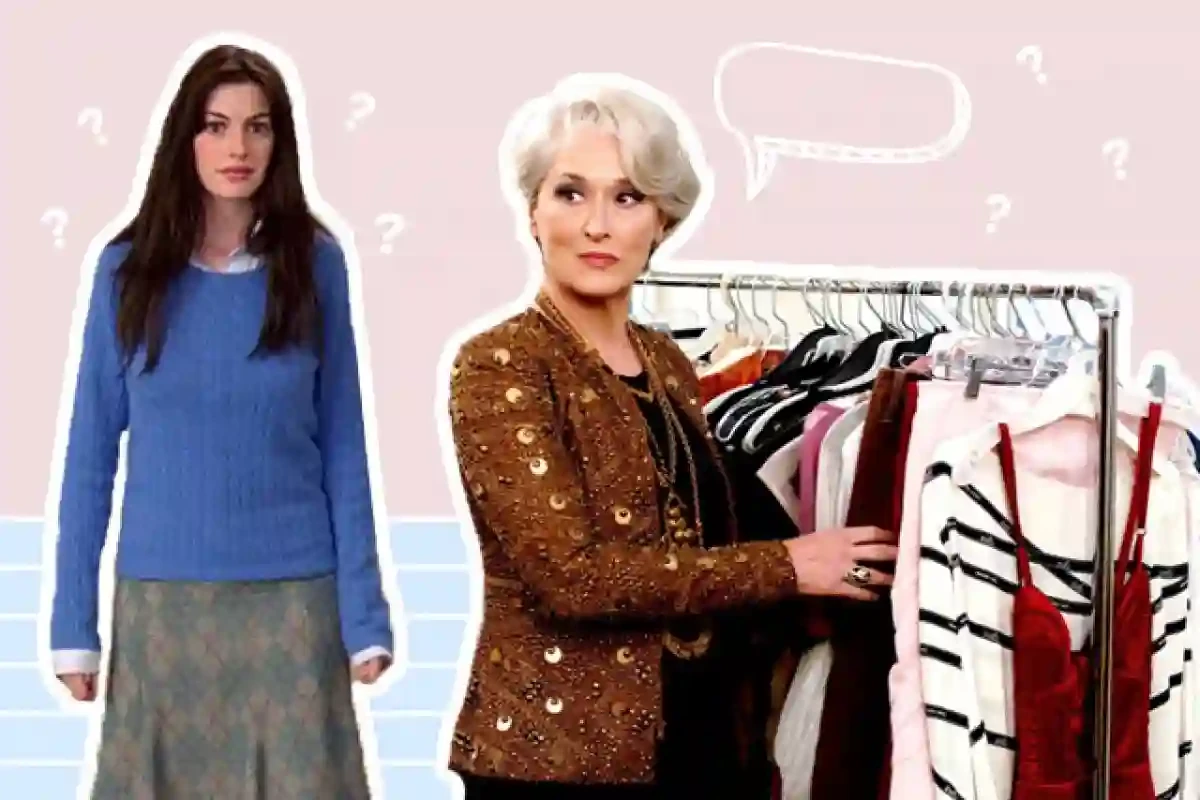
Image Courtesy: Study Breaks
The concept of the trickle-down theory was rooted in economist Thorstein Veblen’s 1899 idea of conspicuous consumption. He was an economist and sociologist who believed that people purchased products to display their economic status and accomplishments. This theory applies similarly to fashion, where trends often originate at the top and gradually become accessible to the masses. A fashion trend originating at the top also serves as a means to showcase an individual’s economic status and accomplishments.
To be precise, Veblen described the economic engine: conspicuous consumption, the habit of buying visible luxury to signal status. The fashion version of the idea was set out a few years later by the German sociologist Georg Simmel, whose 1904 essay “Fashion” argued that elites adopt a style to set themselves apart, lower groups imitate it to climb, and elites then move on, which keeps the cycle turning. (The legal scholar Rudolf von Jhering had sketched a similar class-diffusion idea as early as 1883.) That loop of imitation and distinction is what we now call the trickle-down effect.
Let’s explore this theory with an example: In 2020, dad’s sneakers became a hit on the market. It all began with Louis Vuitton in 2018 during their fashion show, featuring the shoes called Arclight. Subsequently, other brands started adopting and innovating the same trend, such as Balenciaga, Nike and then Fila. Even brands like Vans departed from their classic styles and introduced bulky dad’s sneakers, like the Varix Wic. Once the trend reached the masses through Vans, it further proliferated through big-box stores.
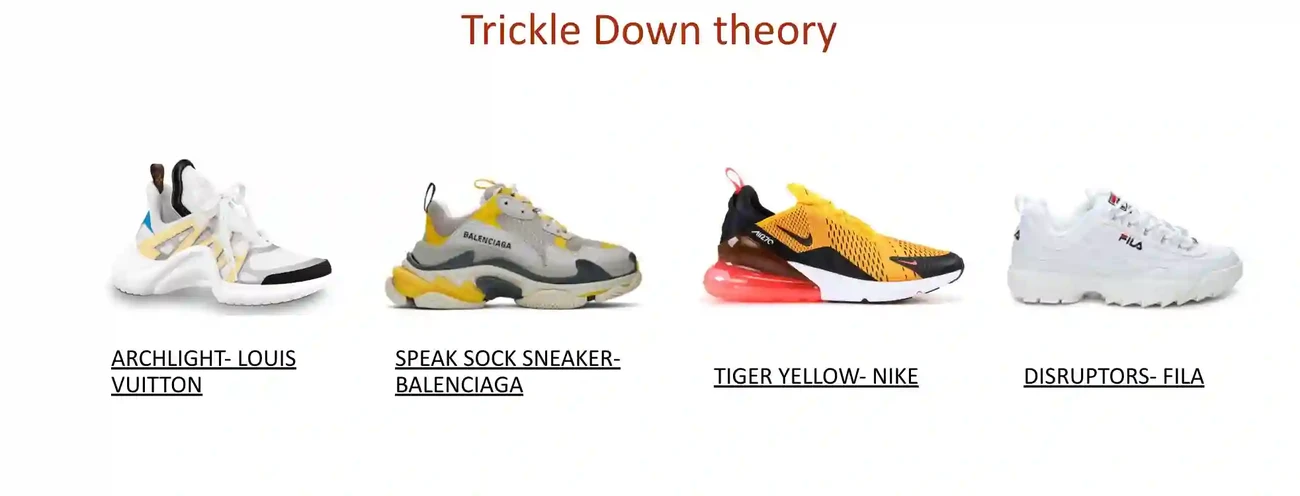
Image Courtesy: Author
The trickle-down theory in fashion occurs because not everyone can afford luxury brands like Louis Vuitton. When Arclight sneakers were introduced, they were priced at approximately 90,000 rupees. As the trend trickled down to Balenciaga, the price decreased to approximately 68,000 rupees. When Nike adopted the trend, their version was priced at around 17,000 rupees, and then Fila offered them for only 9,000 rupees. Eventually, big-box stores sold them for as little as 1,000 rupees, making them more economically accessible to a wider audience.
Trickle-Down Theory’s Impact on the Fashion Design Industry
Trickle-down theory, where trends flow from high-end fashion to mainstream markets, undeniably shapes the fashion industry. However, even within this framework, designers must balance innovation with principles of fashion design, such as silhouette, proportion and colour theory, to create garments that resonate with consumers. Here’s a closer look at its influence on designers, brands, and consumers.
1. Designers:
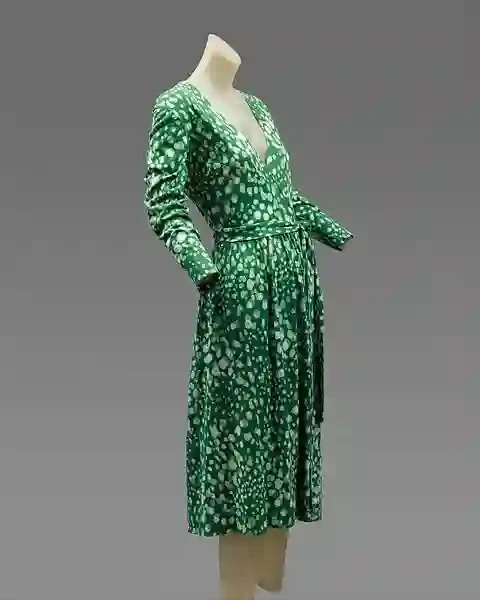
Image Courtesy: Diane von Fürstenberg
When a haute couture designer, occupying the apex of the fashion hierarchy, initiates a trend, it exerts a prestigious influence on the industry. This influence often translates into increased sales and potential financial benefits through collaborations. For example, Diane von Fürstenberg’s iconic wrap-around dresses, introduced in 1975-76 with a blend of cotton and rayon, continue to enjoy widespread popularity. These dresses have been adopted by numerous other high-end designers, fast fashion brands, and large retail chains, attesting to their enduring appeal and influence across various segments of the fashion market.
2. Brands:
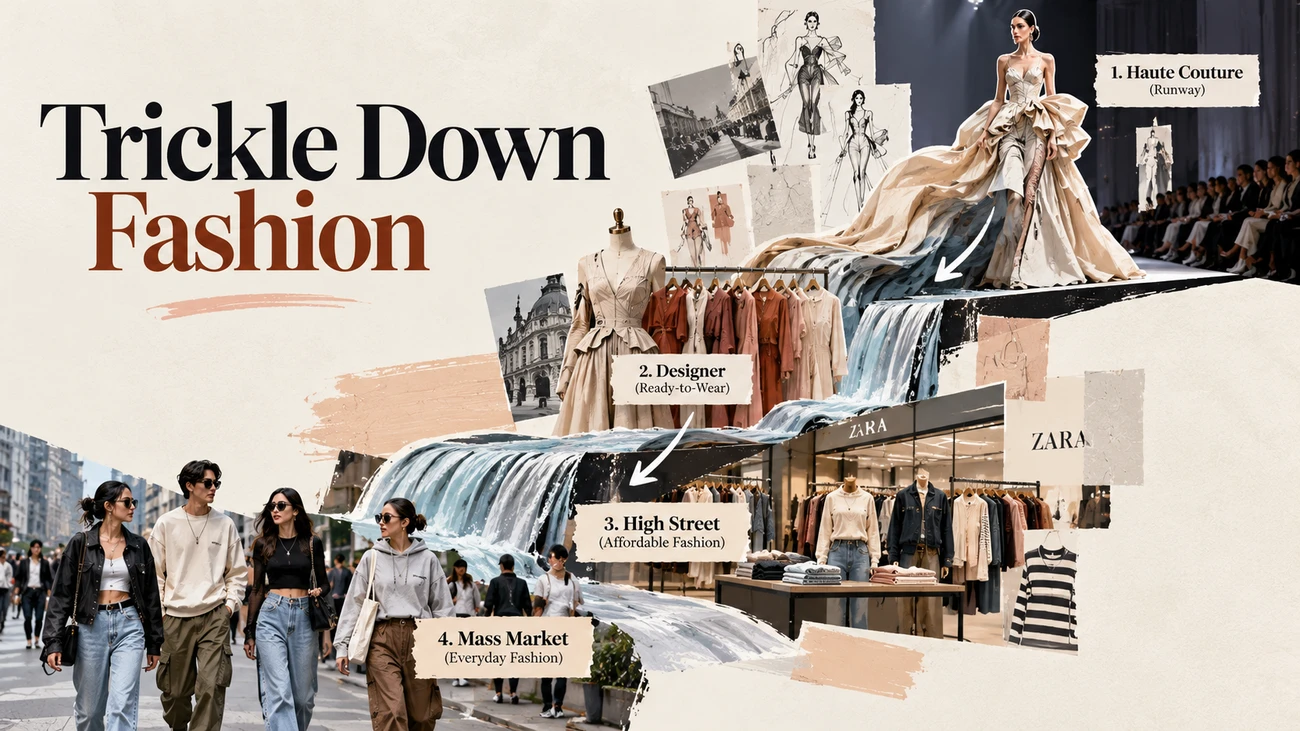
Fashion brands positioned in the mid-range or lower-end of the market can inspire people to purchase luxury goods at a budgeted price, bridging the gap between fashion design and fashion communication. However, excessive copying of high-end designs can disrupt brand originality and creativity. For instance, fast fashion brands like Zara often replicate high-end designs and offer them at significantly lower prices. This approach allows consumers to access trendy clothing pieces at more affordable prices, albeit raising questions about the authenticity and integrity of the fashion industry.
3. Consumers:
Consumers reap the rewards of this theory by gaining access to trendy clothing and footwear at different price ranges. For example, the same product, such as dad’s sneakers, is available across a spectrum of price points. This accessibility enables consumers to purchase fashionable shoes at more affordable prices, ensuring that trendy styles are within reach for a wider range of individuals.
Criticisms of Trickle-Down Fashion
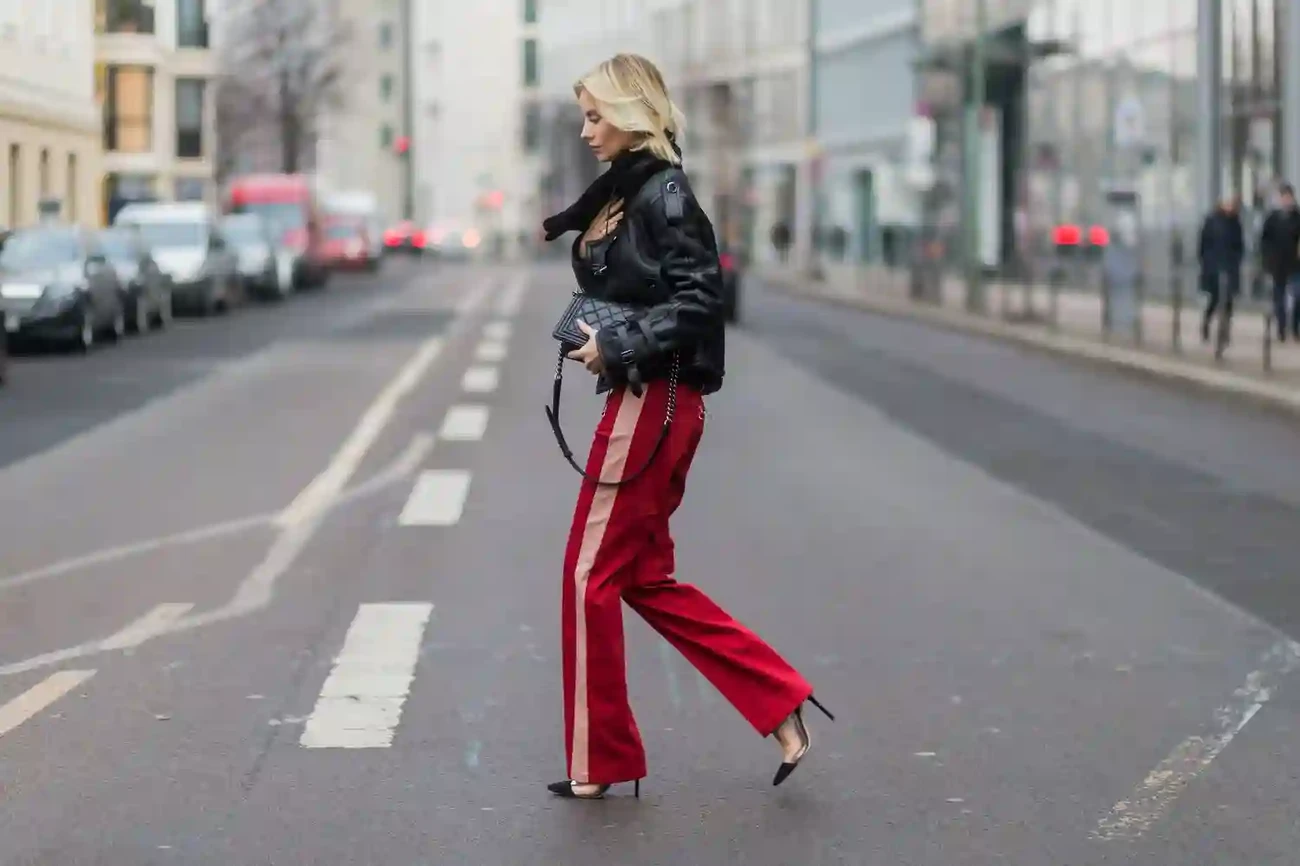
Image Courtesy: Investopedia.com (Acceptance of Athleisure)
Criticism of the trickle-down effect in contemporary fashion discourse encompasses several key points:
1. Lack of Inclusivity:
In the fashion industry, the authority to dictate trends is predominantly held by fashion innovators, high-end designers, and top management. Smaller trendsetters or designers often lack a platform to express their opinions, resulting in a dearth of innovation and creativity.
2. Environmental Impact:
Constantly changing fashion trends driven by the trickle-down effect contribute to overconsumption and waste in the fashion industry. Consumers should be mindful of the environmental repercussions of fast-moving fashion trends.
3. Lack of Innovation:
Relying solely on fashion innovators, influencers, and high-end designers for trendsetting can stifle creativity and uniqueness within the industry. This limited pool of trendsetters may lead to homogenised styles and a lack of fresh perspectives.
4. Cultural Appropriation:
High-end designers sometimes draw inspiration from various cultures without proper consideration, leading to instances of cultural appropriation. For example, styles like boxer braids or cornrows may be appropriated from marginalised cultures without acknowledgment or respect.
5. Inequality:
The trickle-down effect, where trends reach a larger audience, may exacerbate economic inequalities within the fashion industry. Garment workers often face unfair wages and working conditions as demand increases due to trend adoption, widening the economic divide.
Now in the coming paragraphs we are going to be discussing the drivers of trickle down theory and its impact on mainstream styles and consumer behaviour.
Drivers of the Trickle-Down Effect: How Fashion Communication Shapes Consumer Desire
1. Media’s Portrayal of Wealth and Aspiration
The role of media and influencers is immense in today’s society, with platforms like social media, television shows and fashion magazines playing a significant part in shaping people’s perceptions. They often portray wealthy individuals as aspirational and desirable, directly influencing consumers’ psyche. Influencer culture, showcasing products, services, and experiences, fuels the desire of the average person to purchase items they believe will bring them happiness and fulfilment.
2. Celebrity Endorsements and FOMO:
Additionally, when celebrities endorse specific products, it further reinforces the trickle-down theory, as consumers are more likely to buy those endorsed products. Products endorsed by celebrities or influencers create a fear of missing out (FOMO) situation, leading people to buy material things to display their wealth.
3. Fashion Communication for Status Symbols and the Desire for Emulation:
Desires for status and emulation are intricately linked to fashion communication, where the media plays a pivotal role in shaping perceptions of social standing. Through platforms like television, magazines, and social media, certain possessions and experiences are portrayed as indicators of status and success.
Media’s Depiction of Luxury:
For instance, when the media showcases designer clothing, luxury cars, and extravagant vacations, it triggers a desire among consumers to attain these symbols of affluence. The depiction of celebrities’ lifestyles further fuels this aspiration, prompting individuals to elevate their spending on products or experiences in a bid to mirror such lifestyles. Moreover, the pervasive nature of social media intensifies the pressure to maintain a curated image of success in alignment with peers and influencers. Consequently, owning expensive items becomes not just about possession but also about gaining recognition and validation within one’s social circle.
4. Democratising Trends Through Cost-Effective Production
Mainstream retailers and designers frequently leverage high-end trends to create more affordable options for a broader audience. They achieve this by utilising alternative materials, such as synthetic polyester instead of silk or cashmere, which closely resemble the originals. Additionally, they may employ different production techniques, such as power looms instead of handlooms, to reduce labour costs. Costing and pricing strategies are implemented to minimise overhead expenses and improve profit margins. As a result, consumers can obtain trendy apparel at a fraction of the cost of luxury items.
Impact on Mainstream Styles and Consumer Behavior
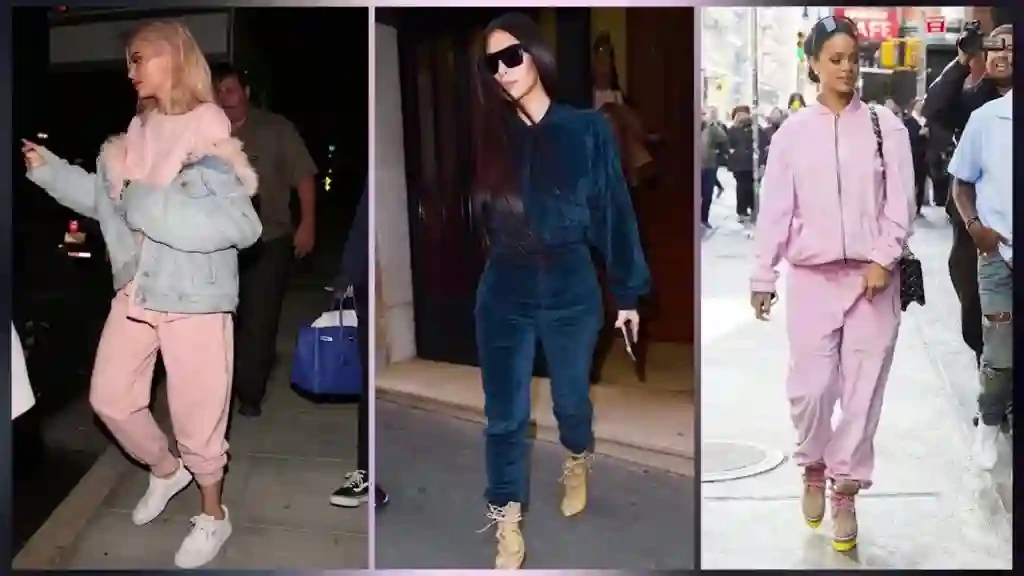
Image Courtesy: BellaCanvas
Some case studies where high-end fashion trends that have influenced mainstream fashion:
1. Athleisure is a style of clothing that blends athletic wear with fashion, making it suitable for both sports activities and everyday wear. It first emerged in the early 2000s, introduced by luxury brands such as Chanel. Later, designers like Alexander Wang popularised the trend, incorporating sporty elements into their collections. As athleisure gained momentum, brands like Adidas and Nike embraced it, further solidifying its place in mainstream fashion. The impact was significant, as fast fashion giants like H&M, Zara, and Gap quickly followed suit, incorporating athleisure into their offerings to meet the growing demand for comfortable yet stylish clothing.
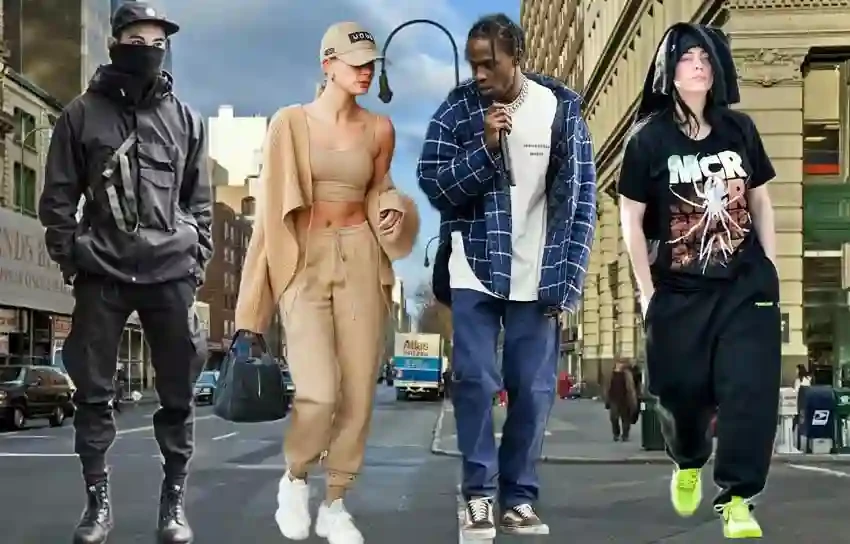
Image Courtesy: Instyle.com
2. Streetwear is a style of casual clothing that originated in urban communities and skate culture. It encompasses four main varieties: original, sportswear, adopted, and luxury. Streetwear actually moved the other way. It grew out of 1980s and 1990s skate, surf and hip-hop subcultures and labels like Stussy and Supreme, then rose into luxury when designers such as Virgil Abloh, who founded Off-White and later led menswear at Louis Vuitton, put it on the runway, before fast-fashion brands like H&M copied it back down. It is a textbook case of trickle-up, not trickle-down.
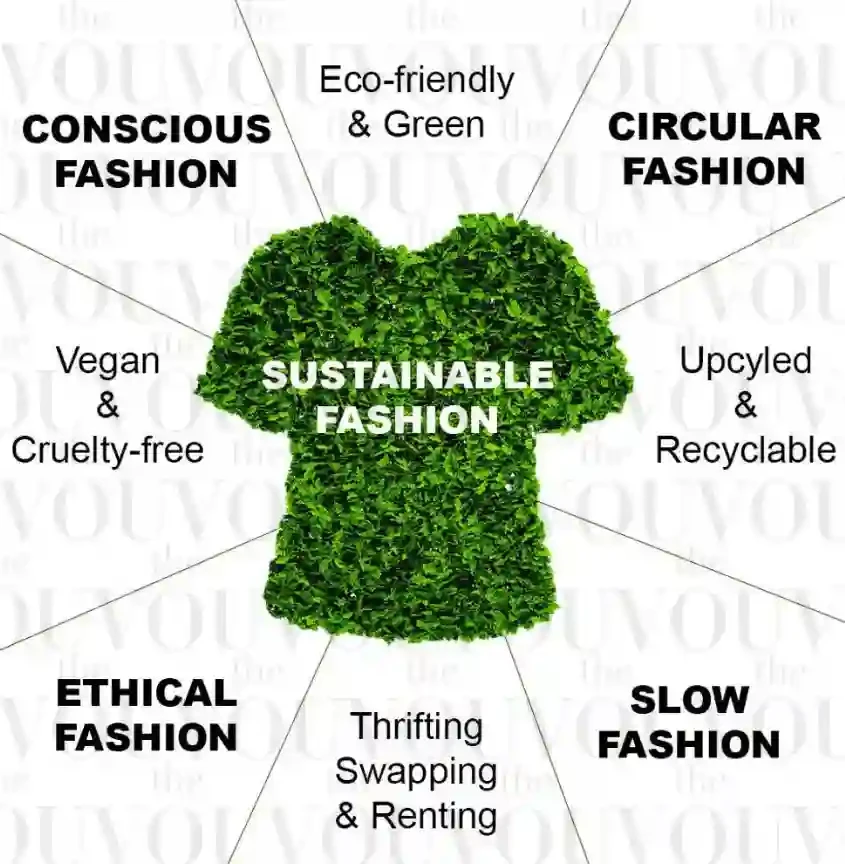
3.Sustainability has surged in popularity as awareness of the fashion industry’s environmental impact has come to the forefront. This movement was championed by Vivienne Westwood, who advocated for fair labour practices and the use of eco-friendly materials. Her adoption of sustainable practices sparked industry-wide discussions, prompting brands like H&M and Zara to introduce sustainable apparel lines.
In essence, the trickle-down effect significantly influences consumer purchasing behaviours, fostering brand loyalty among consumers. When individuals admire trends set by luxury brands but find themselves unable to afford them, their allegiance may shift to premium or mass-market brands that incorporate similar trends into their collections. For example, if renowned brands like Louis Vuitton introduce a chic open top at a premium price point, and subsequently, fast-fashion brands like Max Fashion offer a similar design at a more accessible price, consumers are likely to develop a stronger affinity towards the latter. This phenomenon underscores the profound impact of trend diffusion on brand loyalty within the fashion landscape.
The Evolution of Consumer Aspirations
In this section, we delve into the multifaceted aspects influencing the selection of fashion trends, ranging from psychological and societal factors to economic considerations. These interconnected elements play a pivotal role in shaping the trajectory of fashion preferences and consumer behaviour.
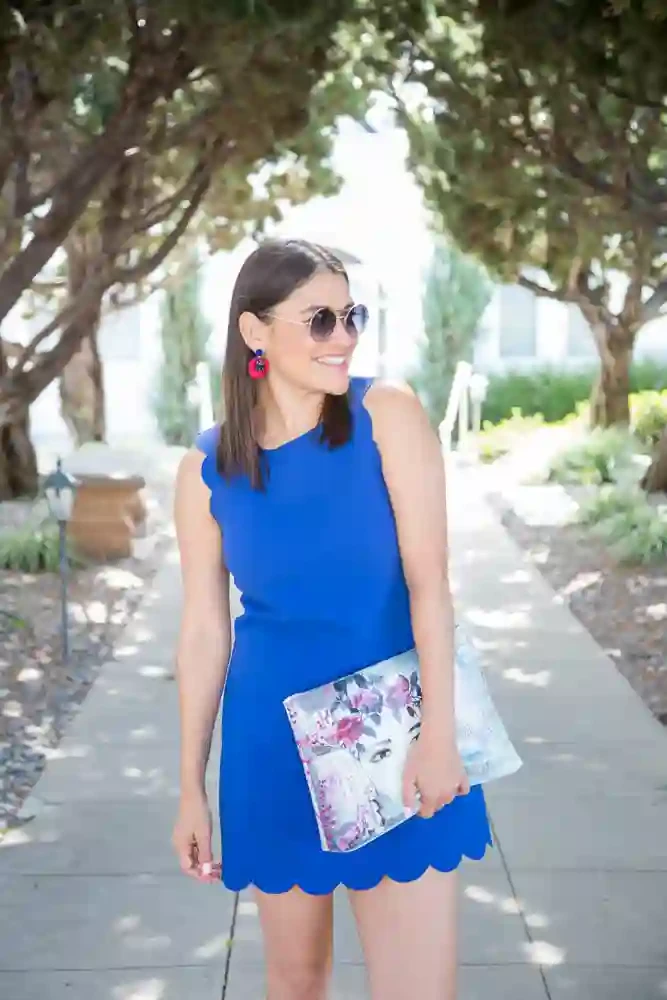
Image Courtesy: VStyleBlog
1. Psychological factors significantly influence consumer choices in fashion. Consumers select and wear clothing and accessories to express their individuality, personality, and identity. These choices are shaped by aspects such as self-esteem, self-image, and self-expression.
For some individuals, wearing bold colours serves to convey confidence, while others prefer minimalistic styles, which they perceive as representing sophistication. However, there exists a middle ground where individuals may opt for a blend of bold minimalism through techniques such as colour blocking. This involves wearing bright, solid-coloured garments while maintaining simplicity in accessories, such as opting for beige, gold, silver, or white jewellery, but avoiding black.
All of these choices vary according to the consumer’s taste, preferences, and the image they wish to project.
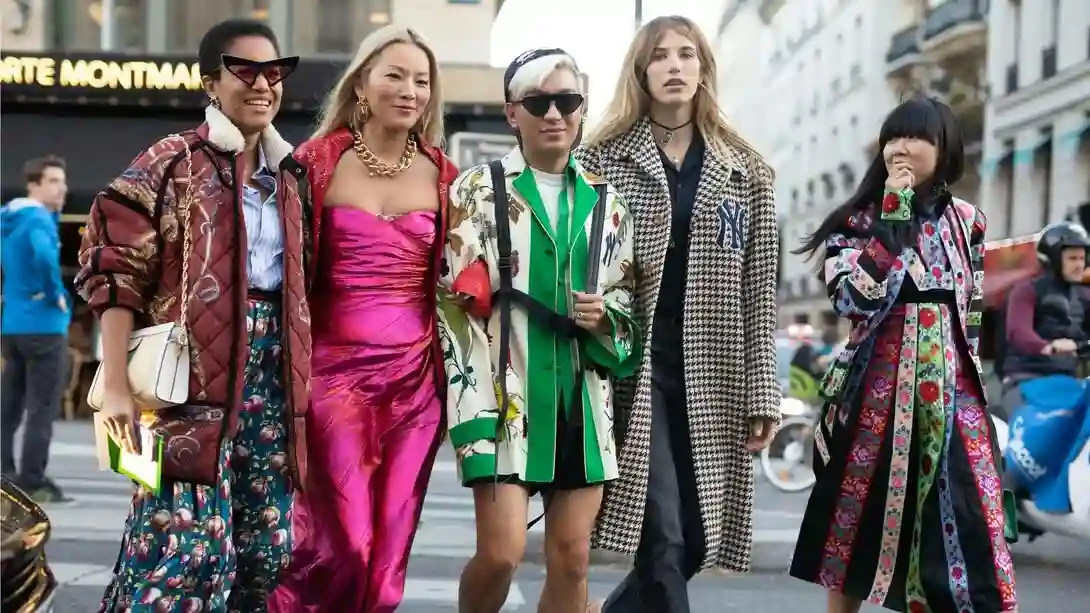
Image Courtesy: Pinterest.com
2. Societal factors significantly influence fashion preferences, encompassing various aspects such as the environment, social interactions, peer influence, and the role of social media. For example, social media platforms play a pivotal role in shaping trends and showcasing aspirational lifestyles, which can influence consumers’ fashion choices. The pervasive presence of fashion influencers and celebrities on these platforms can create a sense of urgency and desire to stay on trend. Consequently, consumers may feel compelled to purchase clothing and accessories to align with the perceived ideals of fashion and lifestyle depicted on social media.
3. Economic factors, such as income level and purchasing power, significantly influence fashion choices. Individuals with higher income levels often gravitate towards luxury and designer brands, while those with lower incomes prioritise value for money. Additionally, the amount of disposable income available to individuals plays a crucial role in determining their spending on fashion.
Technological Advancements and the Trickle-Down Effect
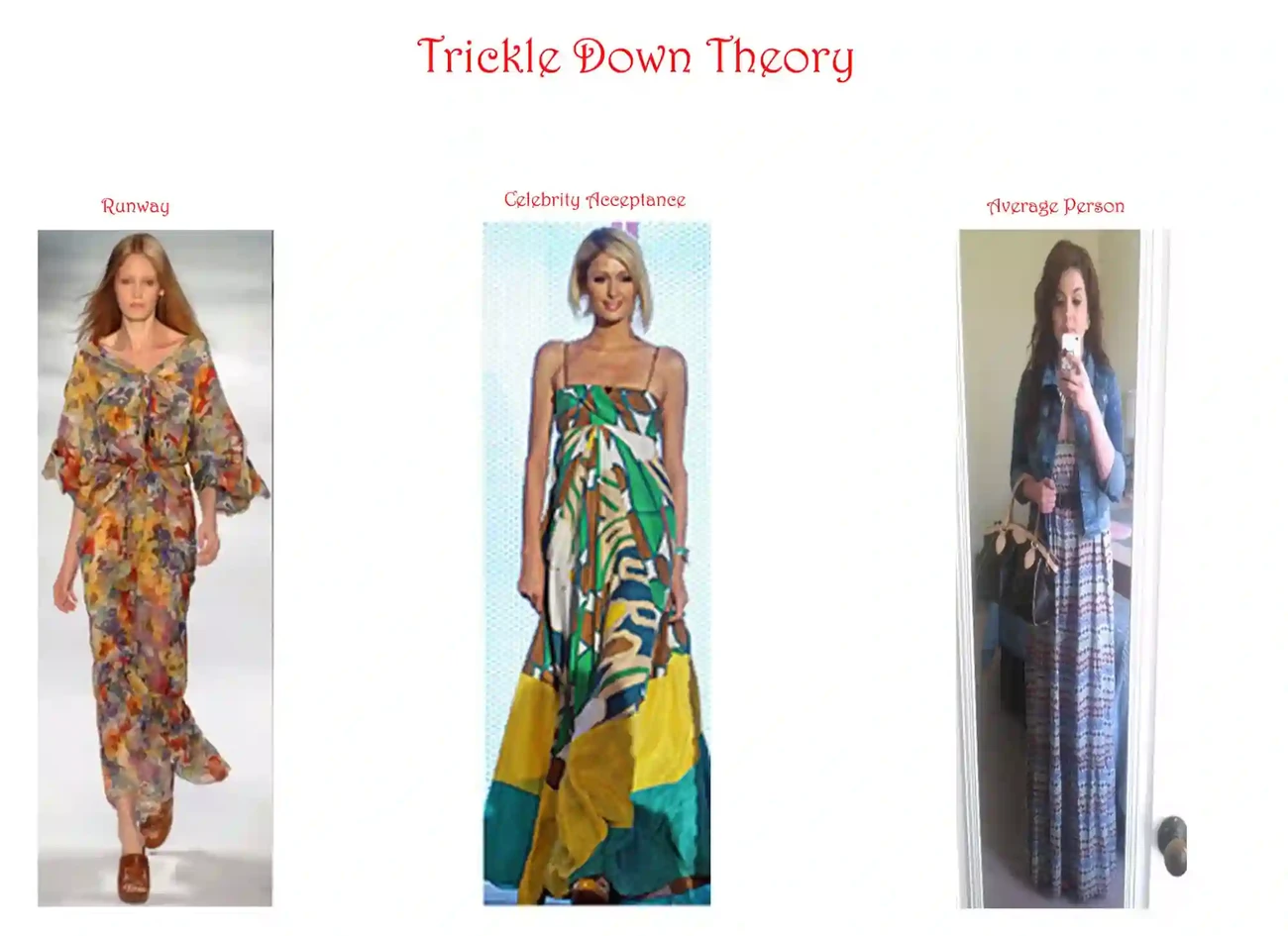
Image credit :Pinterest.com
Technological advancements have played a significant role in helping the trickle-down effect in the fashion industry.
1. Social media and influencer marketing has played a significant role in the movement of fashion from luxury brands to mass-market brands, enabling them to reach a wider clientele. Fashion innovators, influencers, and celebrities have further assisted fashion brands in recognizing and connecting with customers on a global scale. This movement has fueled the trickle-down effect, influencing customer preferences.
2. E-commerce and retail help social media by allowing brands to reach more customers directly, without relying on traditional stores. This benefits high-end fashion brands financially and spreads their trends to wider markets. Visual merchandising and store design also play a role in making online and physical stores attractive to shoppers.
Technology advancements have helped the fashion industry support trickle down effect and advancing trends and styles by using social media platforms, influence marketing and e-commerce.
Trickle-Down Is Only One of Three Models
Trickle-down is the oldest theory of how fashion spreads, but it is not the only one. Design courses usually teach three diffusion models side by side, and knowing all three is what separates a real trend analysis from a surface one.
Trickle-down (Simmel, 1904): trends begin at the top of the social pyramid and move downward as they are copied at lower price points. This is the cerulean-sweater and dad-sneaker story above.
Trickle-across, or horizontal diffusion (Charles King, 1963, building on Robinson, 1958): trends spread sideways across groups at similar levels at almost the same time, because mass production and mass media put a look in front of everyone at once, from designer to high street. King literally titled his paper a rebuttal to the trickle-down theory.
Trickle-up, or bubble-up: innovation starts in the street and in subcultures and rises into high fashion. Denim, the T-shirt, punk and hip-hop streetwear all began at the bottom and were later adopted by luxury houses.
Does Trickle-Down Still Hold in 2026?
Most fashion scholars now argue that pure trickle-down describes the past better than the present. Once elite fashion gave way to mass fashion, and then to social media, the pyramid flattened. A look can now start on a designer’s runway, in a thrift haul on TikTok, or in a creator’s bedroom, and reach millions in days at every price point at once. That is trickle-across behaviour, not top-down. The rise of dupe culture, where shoppers openly hunt for affordable near-copies of luxury pieces, and of microtrends that peak and fade within a single season, has sped the cycle up so much that the slow, orderly filtering from couture to high street barely has time to happen. Trickle-down still explains why some status looks begin at the top, but today it works alongside trickle-across and trickle-up rather than on its own.
How Trend Diffusion Works in India
In India the same forces run through a few local channels. Bollywood and celebrity weddings do much of the trendsetting that a Paris runway does elsewhere: a Sabyasachi or Manish Malhotra lehenga worn by a star is copied within weeks by karigars and shops in markets like Chandni Chowk and by the power looms of Surat, then sold at a fraction of the couture price. Marketplaces such as Myntra, Ajio and Meesho compress the journey further, putting runway-inspired versions in front of shoppers in every tier-two and tier-three city at the same time. It is trickle-down in the wedding-couture segment and trickle-across almost everywhere else.
Why This Matters if You Study Fashion
Understanding how trends move is the foundation of trend forecasting and fashion communication, both central to a design education. At UDIT (formerly IIAD), the B.Des Fashion Design course trains students to read these cycles and design with a point of view, rather than simply chase whatever is filtering down the pyramid this season.
Challenging the Trickle-Down Paradigm
The slow fashion movement champions sustainability and ethical practices, prioritising handcrafted and artisanal techniques over mass production. By favouring handwoven and handcrafted garments over those made using power looms, slow fashion disrupts the fast-paced trickle-down model prevalent in the fashion industry.
Additionally, the trickle-up approach to innovation challenges the traditional trickle-down theory by advocating for the influence of the masses or independent designers in driving fashion trends. This approach highlights examples such as the widespread adoption of denim jeans and the emergence of punk fashion, both originating from subcultures and grassroots movements before attaining mainstream popularity. These instances underscore the significance of bottom-up innovation in reshaping the fashion landscape and questioning the top-down dynamics inherent in the trickle-down paradigm.
In conclusion, the concept of trickle-down theory aptly illustrates the process of product adoption from the top to the bottom of the market. The key drivers behind this phenomenon include the influence of media and social media, the impact of influencers, the allure of status symbols associated with aspirational and luxury brands, accessibility, and adaptability.
Frequently Asked Questions
1. Who invented the trickle-down theory of fashion?
The economic idea comes from Thorstein Veblen’s conspicuous consumption (1899), but the fashion diffusion model was set out by the sociologist Georg Simmel in his 1904 essay “Fashion”. Rudolf von Jhering had described a similar class-diffusion idea as early as 1883.
2. What is the difference between trickle-down, trickle-across and trickle-up fashion?
Trickle-down means trends start at the top and move down; trickle-across (Charles King, 1963) means they spread sideways across similar groups at once; trickle-up means they start in the street and subcultures and rise into high fashion.
3. Is the trickle-down theory still relevant today?
Only partly. Mass production and social media have flattened the old pyramid, so most trends now move across price points and platforms at the same time. Trickle-down still explains why some status looks begin at the top, but it no longer works on its own.
4. What is an example of trickle-down fashion?
The “dad sneaker”: Louis Vuitton’s Archlight (2018) was followed by Balenciaga, Nike and Fila, and finally big-box stores, with the price falling at each step. The cerulean-sweater scene in The Devil Wears Prada dramatises the same idea.
About the author
Shradha Kochhar is a knitwear designer, textile artist and fashion educator with more than seven years of experience in the fashion industry in India and internationally. She trained in Knitwear Design at NIFT Delhi, holds an MFA in Textiles from Parsons School of Design (The New School), and studied at Central Saint Martins. Her knitwear and textile work has been produced for labels including ASHISH, Marshall Columbia, Collina Strada and Tory Burch, and shown at London and New York Fashion Weeks, with features in Vogue (US, UK and India), The New York Times, PAPER and Grazia India. As the founder of Imli Dana and co-founder of LOTA India, she works at the intersection of traditional textile craft, regenerative materials and sustainable, circular design. She has taught at Parsons, Pratt Institute and Polimoda, and writes to help design students understand how the fashion industry really works.
More things to read