Article
Anushka Das
14/09/2026
Fashion design is a visual language, and like any language, it has its own building blocks and rules. The four basic elements of fashion design are colour, line, shape and texture, while the six principles are balance, rhythm, unity, emphasis, proportion and draping. Think of the elements as the alphabet and the principles as the grammar: the elements provide the raw materials of a design, while the principles guide how they come together to create a cohesive garment.
Understanding these fundamentals is one of the first steps in learning fashion design. While creativity and innovation are essential to developing an individual design language, experimentation becomes more effective when it is grounded in an understanding of the basics. Designers can then deliberately manipulate colour, silhouette, texture and other visual qualities rather than relying purely on chance.
In this guide, we explore the elements and principles of fashion design, how they work together, and why understanding these fundamentals is important for aspiring fashion designers.
Here is what we have covered in this blog:
- At a Glance: Elements and Principles of Fashion Design
- Basic Elements of Fashion Design
- Basic Principles of Fashion Design
- How UDIT Teaches These Fundamentals
- Frequently Asked Questions
- Conclusion
At a Glance: Elements and Principles of Fashion Design
Category |
Element / Principle |
Description |
Elements |
Colour |
Hue, value and saturation; sets mood and carries cultural meaning. |
Elements |
Line |
Directs the eye; vertical lengthens, horizontal widens, and diagonal adds movement. |
Elements |
Shape |
The garment’s silhouette or outline on the body. |
Elements |
Texture |
How a fabric looks and feels; changes drape and how light falls. |
Principles |
Balance |
Visual stability, either symmetrical or asymmetrical. |
Principles |
Rhythm |
Repetition that moves the eye through the look. |
Principles |
Unity |
Every part reads as one coherent idea. |
Principles |
Emphasis |
The focal point the eye lands on first. |
Principles |
Proportion |
The size relationship between the parts. |
Principles |
Draping |
How fabric falls and moves on the body. |
Basic Elements of Fashion Design
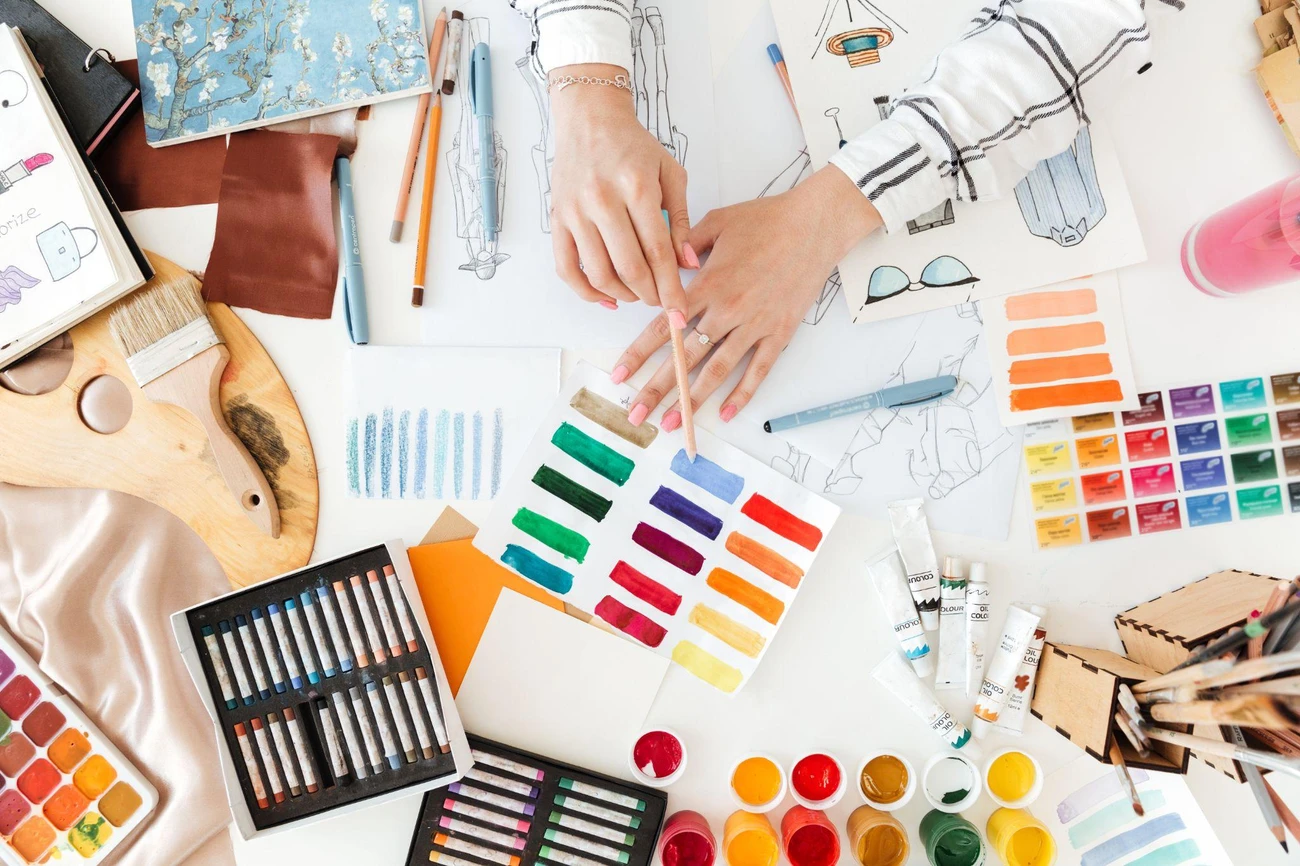
Before moving on to the description of elements of fashion design, it should be clarified what one means by elements. An element is a fundamental entity that defines the constitution of an object or an idea. The elements of fashion design are the fundamental components that make the design of an outfit possible. Without these elements, it would not be possible to amalgamate design as a discipline and convert abstract ideas into material reality.
Colour
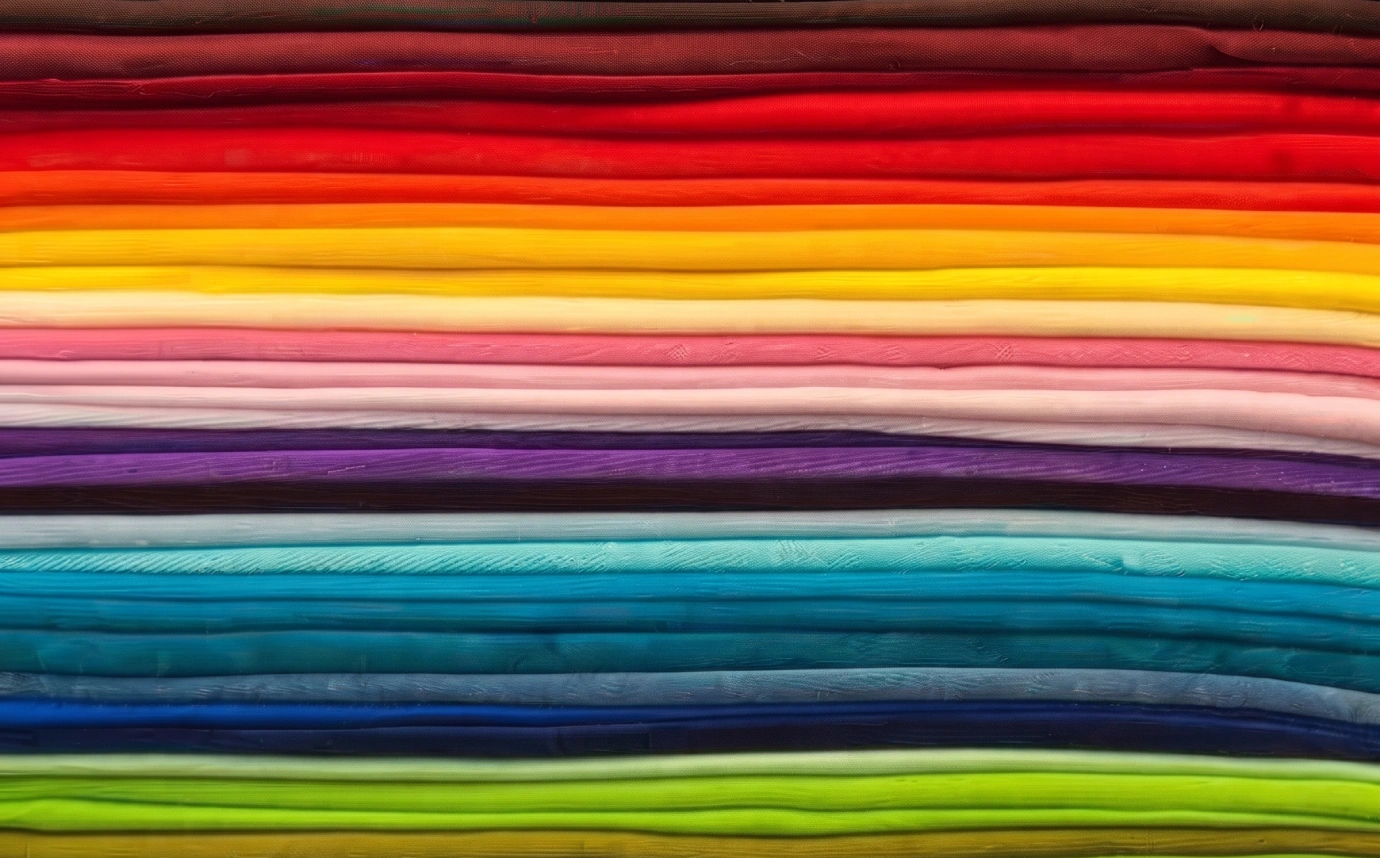
As a visual perceiver, the first element any person notices in a design is colour. One may not have the technical faculty to instantly identify the use of other elements like line or texture, but colour is something that everyone is capable of noticing and understanding. Each colour has different emotional and creative functions to serve in a design and is meticulously curated to align with the concept. Colours are examined in three aspects: hue, value, and intensity. Hue is how the colour is publicly identified, for example, blue, green, red, etc. Value depicts the lightness or darkness of a colour; intensity or chroma is how bright or dull the colour is. As the chroma of a colour reduces, it reaches closer to the colour gray in the spectrum.
Line
The line is a crucial element of all art forms. They have a special place in painting, dancing, poetry, and even music. As an element of fashion design, lines provide flow to the garment and direct the viewer’s eye to the desired focal area. Straight lines impart sharpness or crispness to the garment. Formal clothes like suits typically have straight lines for people to appear sharp and professional. Curved lines, on the other hand, signify fluidity and softness. During pride month, an art installation in a museum, consisting of two long pieces of fabric rolling around in currents of air, became widely famous. The curvature of the fabric rolling in the air resonated with the idea of gender fluidity and the curved or ‘unstraight’ possibility of gender identity, an idea that was amply reflected in the design.
Shape
Shape is also known as silhouette and refers to the outline of the outfit. For example, the silhouette of a chikankari kurti is different from that of an angrakha. Silhouettes can be used for accentuating different body parts. The silhouette should necessarily complement the wearer’s body shape and align with the trend of the times. The choice of a silhouette is also contingent upon the season, taste, and occasion. Sheath silhouettes, hourglass silhouettes, and A-line silhouettes are some of the most common ones.
Texture
Texture refers to the nature of the fabric and how it looks and feels against the skin. The way a fabric has been created and the nature of the thread decides its texture. Khadi clothes are rougher in nature than silk clothes because of the qualitative difference between the cotton and the silk thread. This texture decides the weather and the occasion during which the outfit can be worn. For example, people prefer to wear a silk saree for a celebratory occasion than a cotton saree. On the other hand, for formal settings or for countering hot weather, they may resort to cotton sarees carried with a lot of grace and are ideal for hot Indian summers.
Basic Principles of Fashion Design
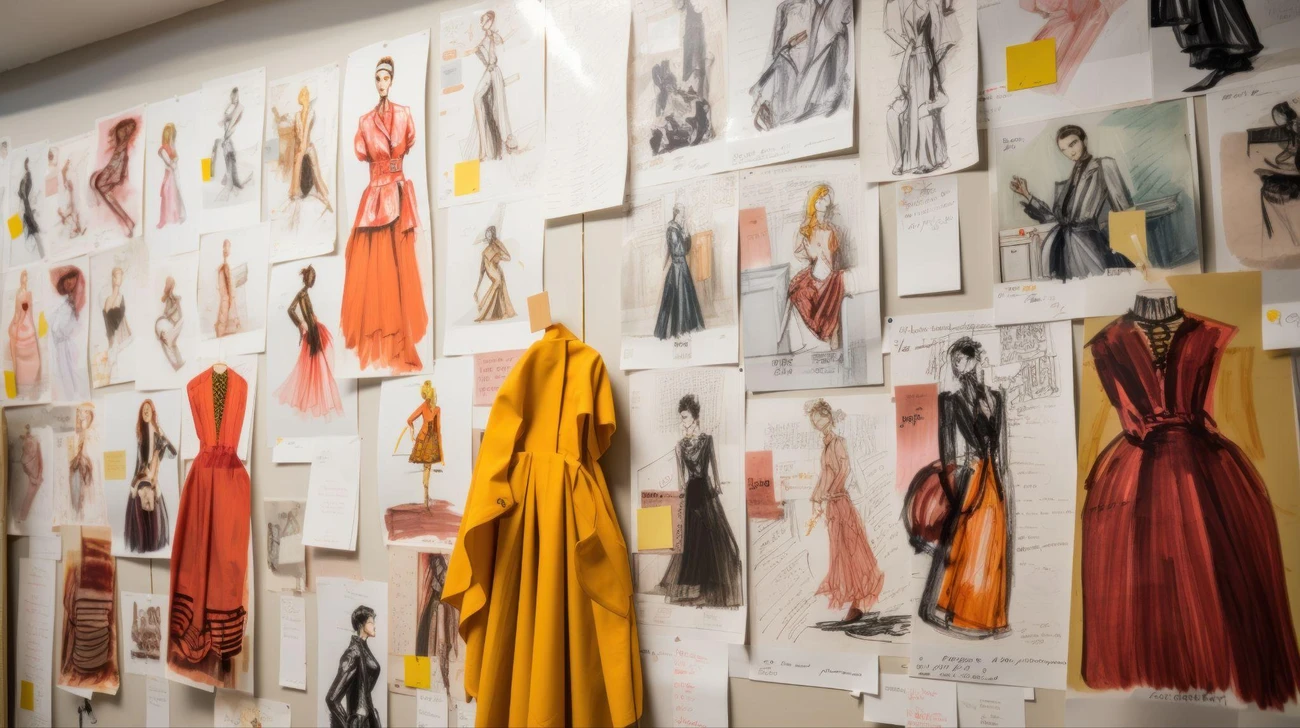
Having gained familiarity with the elements of design, it is crucial to understand how these elements can be brought together to create a stunning design. Mere learning of the alphabet does not bestow one the ability to frame proper sentences and communicate meaningfully. To accomplish that, one needs to learn the principles of grammar to create a meaningful combination of alphabets into words to create meaningful sentences. Similarly, principles of design in clothing are guidelines, following which a designer can create a cohesive and artful garment.
Balance
It is an age-old adage that excess of anything is bad. The adage is a principle of design as well. Balance is a crucial component of design composition. It can be understood as the weight of the design perceived visually. Balance in a fashion design composition is maintained in two ways: Symmetrical or Formal balance and Asymmetrical or Informal balance. Symmetrical balance occurs when a garment can be divided along the vertical axis to produce two similar sides. Elements of design are placed evenly for a formally balanced outfit. Asymmetrical balance is unequal and one side of the design is not obligated to mirror the other side. However, usually, there is one fulcrum point across which such outfits are balanced.
Rhythm
Rhythm directs the movement of the viewer’s gaze upon the garment. It allows the gaze to glide easily from one point to the other. It holds the design elements together and makes the composition cohesive. Rhythm can be created by a recurrence of elements in the design. Repetition of colour, lines, or texture imparts rhythm to the garment in a vertical, horizontal, radial, or spiral manner.
Unity
All art is characterised by the unity of its form and elements. Unity is the fundamental requirement for any art or design piece to be renowned as good. The understanding of proportion and a general synergy between the elements is crucial for a good design composition. The design elements and principles should complement each other to impart unity to the design. Many times unity is also referred to as harmony.
Emphasis
Emphasis in a design is the point of focus where a designer wants the viewer’s attention to lie. It acts as a centre of interest bringing thematic unity to the garment. It grounds the conceptual image of the outfit and anchors the design. Any element of fashion design can be used to provide emphasis to a particular section of the design. The emphasised portion is expected to halt the viewer’s gaze and demands concentration. It is a pause in the overall rhythm of the design.
Proportion
It is not enough to simply bring the elements of design together in a composition, they need to be brought together in the apt proportion to get the desired effect. Proportion among the design elements makes the garment more pleasing to look at. It defines the relationship of one design element to others. Excess or dearth of any element disturbs the proportion of the design and makes it unbalanced.
Draping
Draping is the way a fabric is worn over the body. It takes into account the position of the fabric which is then pinned at ideal position. It is a unique way to add subtle complexity to the design without reducing the simplicity of its beauty. The Indian saree is an internationally acclaimed example of the transformative capability of draping. At the outset, the saree is a seven yards long piece of fabric and appears to be daunting and confusing. Once it is draped around the body, it is the most graceful, rhythmic, balanced garment in the history of clothing. In fact, the modern age does not dictate saree to be worn only by women. Across social media, various male models are emerging who drape the saree in a manner that complements the masculine form. People of non-heterosexual gender identities have also devised new ways of draping a saree that reflect the pride of queerness and bring innovation to the field of fashion design. The transformative capacity of draping is unlimited, and it is one of the most significant principles of fashion design.
How UDIT Teaches These Fundamentals
At UDIT (formerly IIAD), the elements and principles are not a one-off lecture, they are the grammar the whole first year is built on. The B.Des Fashion Design course opens by teaching the ‘grammar of design’, drawing, colour, materials and digital tools, before students move on to pattern-making, draping and garment construction in later years. Draping in particular becomes a hands-on studio skill rather than a definition, and craft-cluster immersions show students how colour, texture and line are handled by the artisans who make cloth. Learning the fundamentals by making, not just reading, is what turns a checklist of ten terms into design instinct.
Frequently Asked Questions
1. What are the elements of fashion design?
A: The four building blocks of any design: colour, line, shape (silhouette) and texture. They are the raw materials a designer works with before applying the principles.
2. What are the principles of fashion design?
A: The rules for combining the elements into a finished look: balance, rhythm, unity, emphasis, proportion and draping.
3. What is the difference between elements and principles of design?
A: Elements are the components you use (colour, line, shape, texture); principles are how you arrange them (balance, rhythm, emphasis and so on). Elements are the alphabet, principles are the grammar.
4. What is emphasis in fashion design?
A: Emphasis is the focal point of an outfit, the one feature, such as a bold neckline, a statement colour or embellishment, that the design wants the eye to notice first.
5. Why are the elements and principles of fashion design important?
A: They give designers a shared, reliable framework, so ideas are grounded in proven design logic and can be communicated, refined and taught rather than left to chance.
Want to learn these fundamentals by making? Explore B.Des Fashion Design at UDIT.
Conclusion
The understanding of principles and elements of fashion design shall allow a spirited designer to brew breathtaking compositions in their mind and translate the idea into reality. Whether it is couture designing or designing clothes for everyday usage, following the basic principles of fashion design will prove fruitful to all creative designers. One should use them as a guideline to produce better quality designs, but they should not let these principles limit their imagination. Once one knows what these principles and elements of fashion design are, one can use them in unusual ways to create garments that signal the arrival of a new era of fashion design.
About the Author
Omer Fayaz is a media and communications professional with a Master’s in Convergent Journalism from the Central University of Kashmir. He has worked in communications, content and branding across the education, media and development sectors, with roles at WRI India, the Indian School of Business and Finance and Leverage Edu, and has authored design and education articles for the Indian Institute of Art and Design (now UDIT). He writes on design, culture and creative education, turning specialist ideas into clear, practical guides like this one.
More things to read