Article
Anushka Das
31/08/2026
Overview:
Quick answer: Traditional Rajasthani attire centres on a few core garments. Women wear the ghagra (a full, gathered skirt), the choli or kanchli (a fitted bodice) and the odhani (a long veil), usually in bright, hand-block-printed cotton; higher-status women wear the finer lehenga. Men wear a dhoti or pyjama with a kurta or angrakha and, most distinctively, a turban (safa, pagri or paag) whose colour and knot signal caste, region and occasion. Across all of it, colours, motifs and borders work as a visual language that marks a wearer’s community, marital status and life stage.
Table of contents
- Traditional Attire in Rajasthan: A Quick Guide
- Language of Textiles in Western India
- A Look at Rajasthan’s Royal Textile Tradition
- Exploring Regional Attire in Rajasthan
- Decoding Rajasthani Attire for Men
- Deciphering the Dress Code of Rajasthani Women
- Rajasthani Attire at a Glance
- Motifs as Markers of Identity in Rajasthani Dress
- Role of Colours in Rajasthani Textiles:
- Evolving Role of Traditional Dress in Modern Rajasthan
In Rajasthan, what you wear speaks before you do. The colour of a man’s turban, the border on a woman’s skirt, the motif block-printed across an odhani: each is a line in a visual language that signals caste, community, region, marital status and trade. To understand Rajasthani dress is to learn how to read it, and that is what this guide sets out to do.
The vast territory of India has been settled by successive waves of immigrants over a period of 5000 years. In India, we speak 22 official languages and nearly 1369 dialects. To move through India is to move through a kaleidoscope of ever-changing groups of people, each with its own colours, its own rituals, its own language and dresses. Although regional identity is frequently associated with languages and dialects, none are as universally recognised as the language of dress and appearance. Textiles and clothing carry significant social significance, revealing the wearer’s societal position, status, occupation, ethnic and religious affiliations, gender, and marital status.
For the fundamentals of the field, see our guide to what fashion design is.
Traditional Attire in Rajasthan: A Quick Guide
Garment |
Worn by |
What it is |
Common significance |
Ghagra |
Women |
Full gathered skirt |
Everyday & ceremonial |
Choli/Kanchli |
Women |
Fitted bodice |
Worn with ghagra |
Odhani |
Women |
Long veil/scarf |
Dress, modesty, identity |
Safa/Pagri |
Men |
Turban |
Region, community, occasion |
Angrakha |
Men |
Traditional upper garment |
Traditional/formal wear |
Language of Textiles in Western India
As one of the most ancient and culturally rich civilizations globally, Indian culture boasts a treasure trove of textile traditions, distinct from its fashion design counterparts that focus more on fleeting trends. This is more evident than in Rajasthan and its neighbouring state, Gujarat, where clothing is intricately linked to social distinctions. In Rajasthan, where diverse groups of castes, tribes, and religions coalesce, each historically with its own distinct dialects and social norms, identification of these groups has evolved through visual cues. The aim of this article is to explore the language of hand-block-printed textiles in western India, specifically Rajasthan and demonstrate how textiles serve as a vehicle of identity.
A Look at Rajasthan’s Royal Textile Tradition
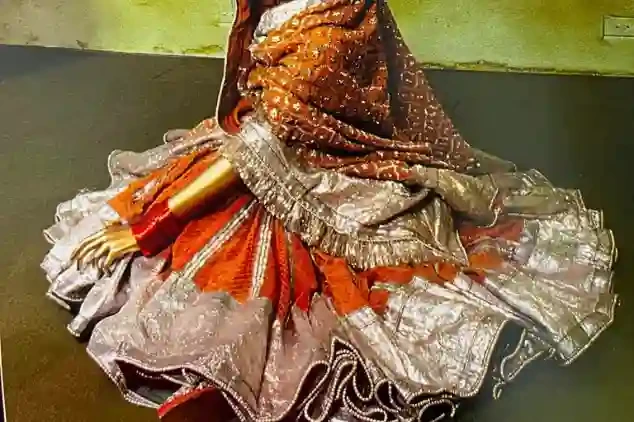
Image Courtesy: Costumes and Textiles of Royal India-Ritu Kumar
The rulers of the ancient kingdom of Amer belonged to the Kachchawahas clan, who were among the patrons of the Hindu Kshatriya, or warrior caste. Descendants of the Central Asian Yuen-chi nomads, who traversed the mountain passes into the northern heartland of Hindu territories around the first century AD, eventually settled in the region surrounding the Aravalli Hills, which later became known as Rajasthan, the land of kings. During prolonged periods of peace, the region’s renowned textile crafts flourished, becoming increasingly sophisticated. The Karkhanas (workshops) were bustling hubs of activity, with skilled craftsmen benefiting from the patronage of wealthy Maharajas and their courts, allowing them to expand their repertoire of designs and refine their techniques.
Exploring Regional Attire in Rajasthan
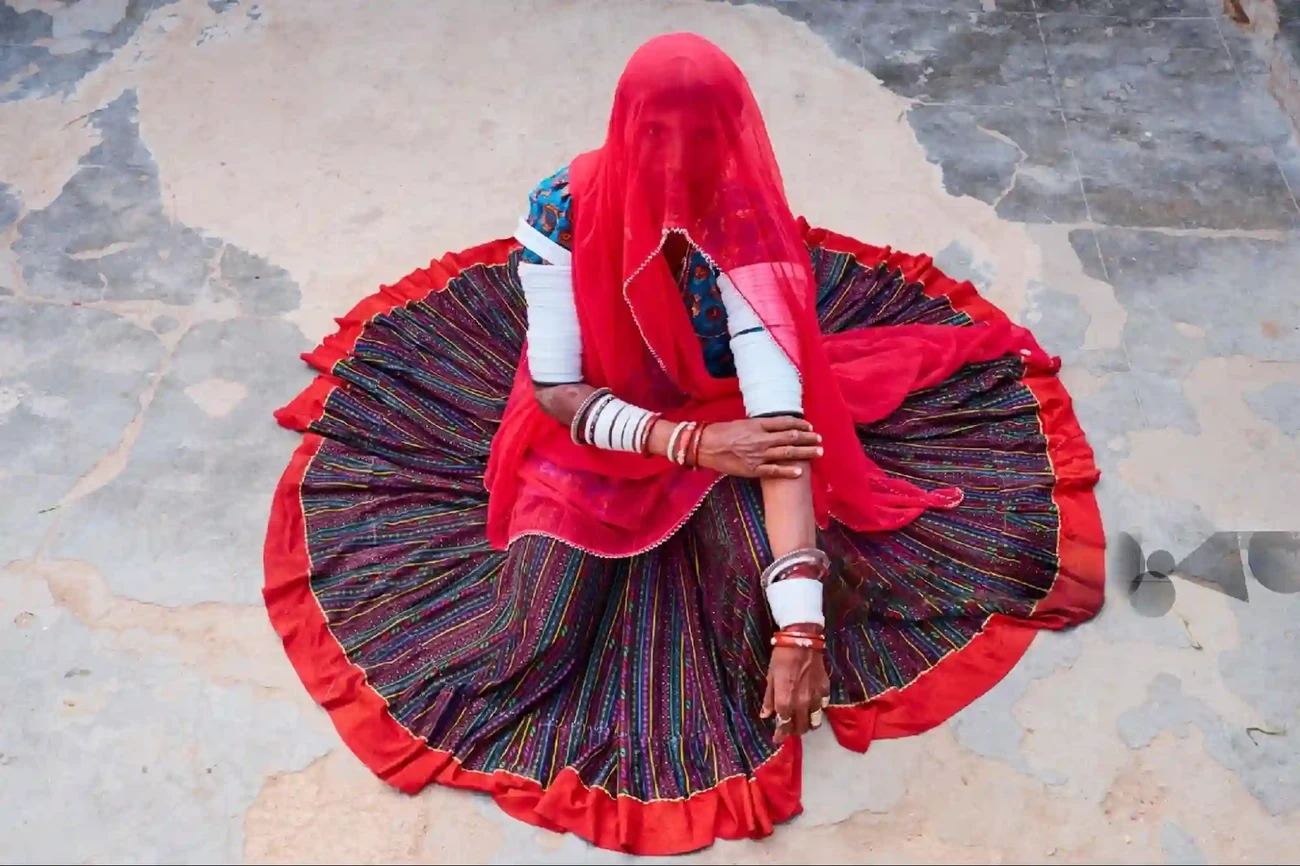
Image Courtesy: Author Anushka Das (Getty)
Building upon India’s rich textile history, which stretches back millennia and is known for its vibrant colors, intricate designs, and diverse weaving techniques, Rajasthan’s clothing traditions offer a fascinating glimpse into the state’s cultural tapestry.
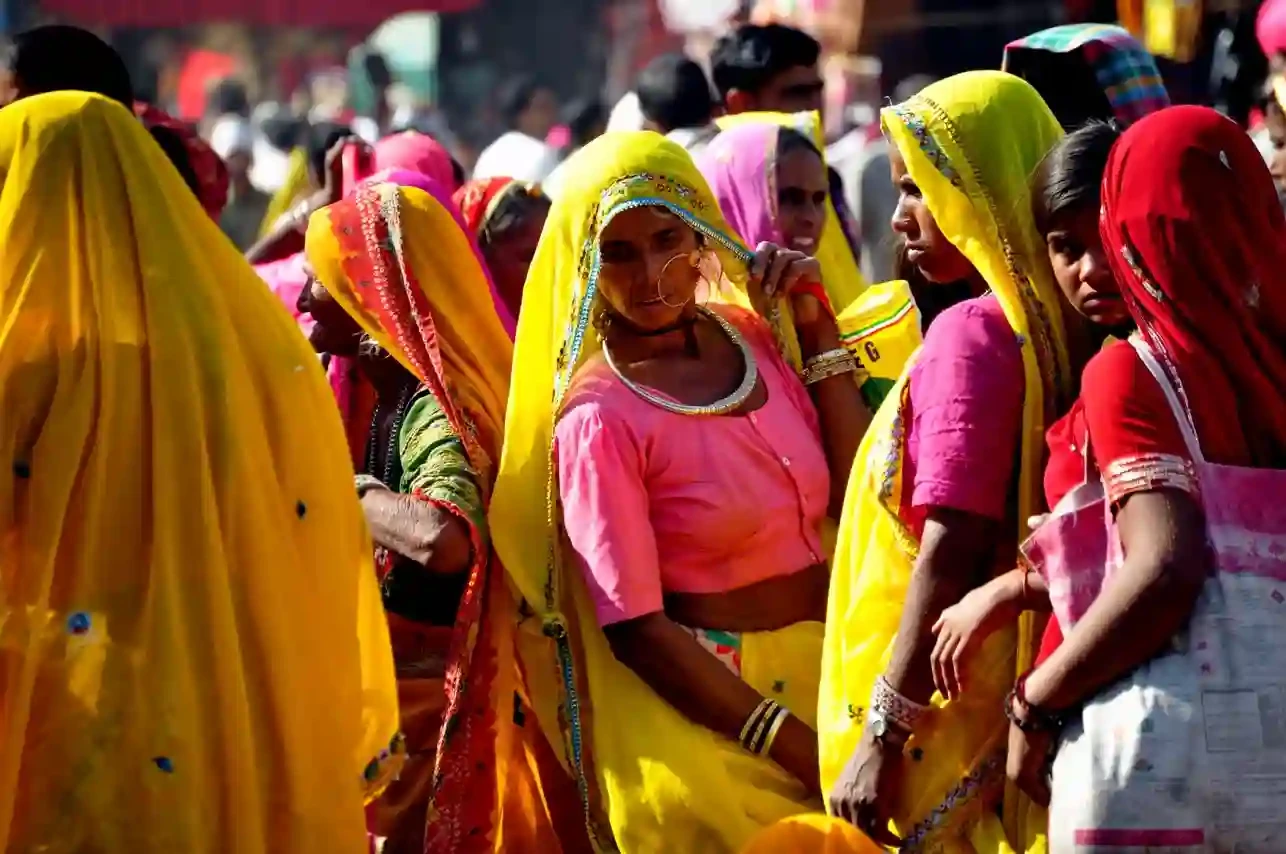
Across all districts of Rajasthan, traditional distinctions mark regions such as Marwar, Mewar, Dhundhar, Hadoti, Godwad, Shekhawati, Vagad, Bikana, and Mewat, each bearing its own distinct cultural heritage. Within these regions, every community exhibits a unique style of attire, which serves as a marker of their identity.
For the inhabitants of this desert region, the monochromatic landscape and lack of distinguishing features in their everyday surroundings have stimulated a heightened imagination in terms of colour and motifs. The stark contrast between the barren surroundings of the Thar Desert in the far west and south of Rajasthan and the vibrant colours and bustling life of the scattered towns and villages seems to inspire a decorative impulse to embellish even the most mundane items of daily use, from textiles to everyday articles.
Among the nomadic groups, the Rabari herders, Banjara traders, and Gadhia Lohars, the blacksmiths stand out as particularly fascinating and distinctive. They are easily recognisable by their characteristic attire, adorned with tattoos, jewellery, and hairstyles, which collectively contribute to sustaining the cultural identity of each district and subgroup within the community as a whole. For instance, Rabaris from Kutch in Gujarat often wear black and red tie-dye camel wool garments, adorned with intricate hand embroidery. In contrast, those from Rajasthan prefer the use of block-printed Khara fabric or voluminous skirts as their attire.
Decoding Rajasthani Attire for Men
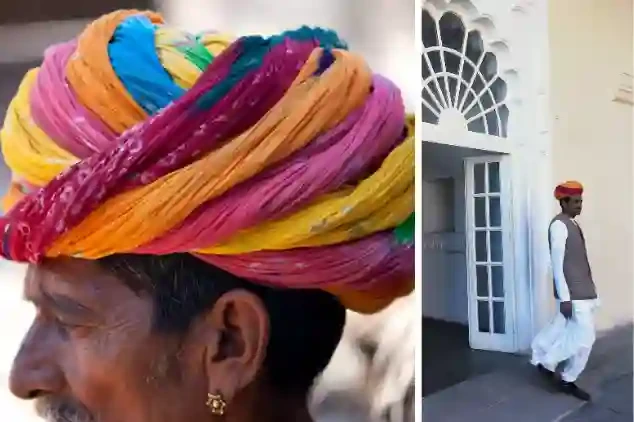
Image Courtesy: Author (Anushka Das)
The headgear worn by men in Rajasthan, known as the Paag, Safa, or Pagri, serves as a distinct indicator of their class, caste, and religion. The turban, also known as Safa, is typically nine metres long and about one metre wide, with its size and shape influenced by climatic conditions. It is said that the style of the turban changes every 15 kilometres within the region, with noticeable variations in size, knotting, colour, shape, material, or pattern serving as markers of differentiation and signifying the wearer’s position in society. Turbans serve practical functions beyond their symbolic significance. Farmers and shepherds wear voluminous turbans for added protection and use them for various purposes, such as pillows, blankets, towels, and even makeshift ropes. The colourful traditional costumes and grand turbans worn by the Maharajas of Rajasthan have also influenced the headgear styles adopted by the people over the years.
Each caste in Rajasthan has its own distinguishing turban colour, aiding in recognition. For instance, shepherds typically wear red turbans, while the Bishnois, known for their nomadic lifestyle and environmental conservation efforts, prefer white turbans.
Certain turban colours are worn seasonally; for example, during February and March, when flowers bloom and crops are harvested, royal Rajasthani men may be seen wearing Falgunia turbans adorned with white and red designs. In July, the predominant colour is Motiya, or pearl pink, while during the monsoon season, green and pink-striped or yellow and red-striped Lehehariya turbans are common. The Pancharanga turban stands out in Rajasthan’s colourful landscape. Special turban designs are reserved for festivals like Diwali, Holi, Dassehra, Raksha Bandhan, Basant Panchami, and Sharad Poornima, each characterised by unique colours and patterns.
Deciphering the Dress Code of Rajasthani Women
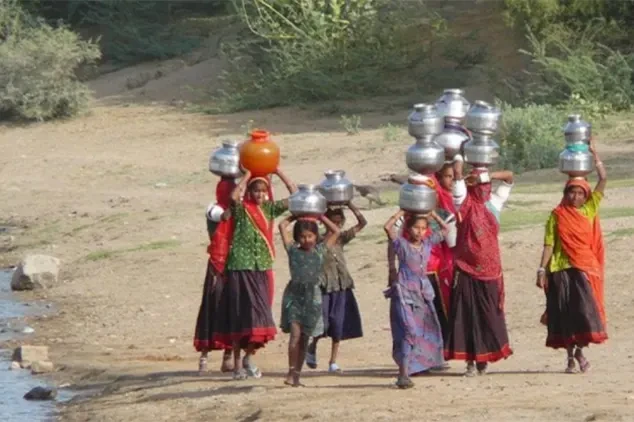
Image Courtesy: Another Word Adventures
The attire of Rajasthani women diverges from the ubiquitous saree, instead comprising a combination of garments: a skirt known as the Ghagra, a fitted bodice called the choli, and a flowing veil cloth known as the Odhani. Together, these pieces form the essential wardrobe of Rajasthani women. For a woman, cryptographic language embraced certain potentially taboo subjects, such as status or widowhood. Every significant life stage the woman reached would call for a new set of clothes to be given by her husband, her marriage, a pregnancy, the celebrated birth of her first child, and the marriage of her oldest son. These are just some of the many life-changing experiences written on her skirt.
Local myths suggest that the number of kalis or panels in a woman’s Ghagra or skirt expresses the level of care her husband bestows upon her. In the everyday routines of agricultural, pastoral, or tribal women, dark-coloured skirts serve to conceal the stains of fieldwork, while vibrant Odhanis offer a vivid contrast. An emblematic aspect of a married woman’s dress is the incorporation of a red border on her ghagra skirt, symbolising her wedded status. But in the event of her husband’s passing, this red border is omitted, and her attire takes on a muted hue, with rust tones replacing the vibrant red and the absence of yellow piping.
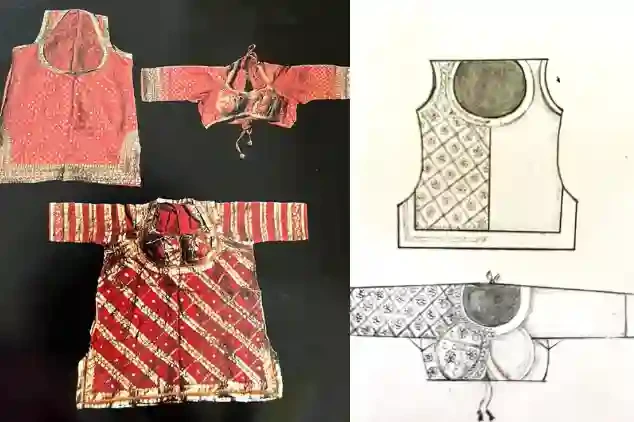
Image Courtesy: Costumes and Textiles of Royal India by Ritu Kumar
In contrast to this, women from the highest social levels within each small community, such as the Rajput families, would indicate their elevated class through the use of a final lighter weight cloth generally dyed in pale or bright shades, such as yellow. The skirts worn are finer and are called lehengas. The bodies that accompany the skirt are called a Choli and a Kanchli, generally made from a matching material. The preference for the light colour and lighter material was used to indicate that their woman is not required to work.
Each festive and ceremonial occasion had its very own traditional ethos and auspicious colour. Tie-dye Leharia was worn at Teej, Chunari, or plain red or green was worn at Gangaur, Faguniya, pale pink or yellow with red dots at Holi, black and gold at Diwali, and pale pink or Moria (a fragrant flower) at Sharad Purnima. Most of the garments were embellished with pure gold and silver Gota. A wonderful exuberance seems to permit the costumes of Jaipur royalty. The crinkled, folds, and gatherers, the colourful tie dye, the elaborate Gota and Zardosi work, and the elegant hand-printed patterns all bear witness to the craftsmanship of the master craftsmen.
Rajasthani Attire at a Glance
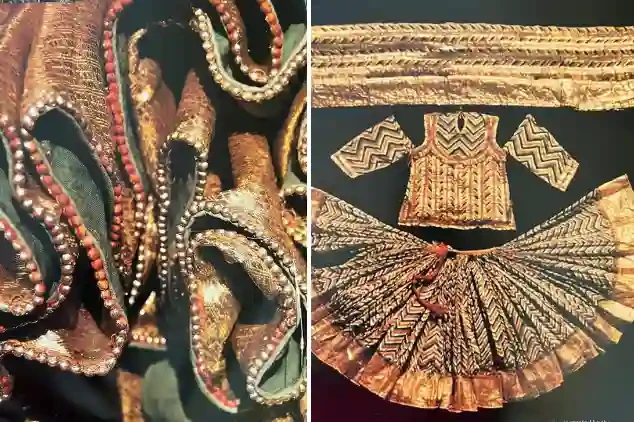
Image Courtesy: Costumes and Textiles of Royal India by Ritu Kumar
- Ghagra – a long, gathered skirt; the number of panels (kalis) can signal status.
- Choli / Kanchli – a fitted bodice worn with the ghagra.
- Odhani – a long veil cloth, usually brightly coloured and patterned.
- Lehenga – a finer, higher-status skirt worn by elite women.
- Safa / Pagri / Paag – the turban; colour, size and knot signal caste, region, season and occasion.
- Leheriya and Bandhej – wave and dot tie-dye techniques.
- Gota and Zardosi – metallic-ribbon trim and metallic embroidery used on festive dress.
Motifs as Markers of Identity in Rajasthani Dress
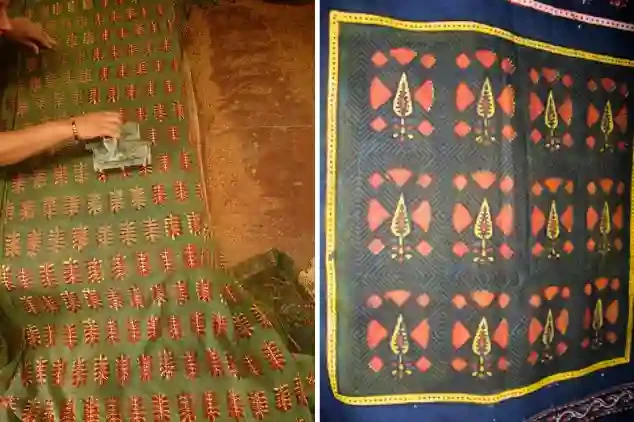
Image Courtesy: Ecofab Stories
In the past, the range of coarse, dark-printed skirts or the Ghagras worn around the rural areas of Rajasthan would have spoken an infinitely more complex language; that can be observed today. Major gatherings, like desert festivals and pilgrimage celebrations, as well as weddings, hold significant importance in this region, drawing attendees clad in their finest attire. These occasions serve as focal points where dispersed social groups converge, forging alliances, renewing friendships, and arranging marriages. Women, veiled and with faces veiled in the presence of men, may convey specific details through prints on their skirts for easy identification. For example, a married woman from the Balotra region who is Mali by caste and has children could be readily distinguished from a Rabari widow or a newlywed Jat girl from the same area, thus averting the risk of inadvertently breaching unspoken community norms.
The print design language of this region comprises 19 simplified plant and object motifs. These motifs subtly hint at the wearer’s community, occupation, and age through their colour combinations. They are meticulously hand-printed onto handwoven cotton using wooden blocks and dyed in soft shades of indigo, red, and yellow.
Bhalka motif:
This motif consists of bold, repeated, large spear designs. Traditionally associated with the Gadiya Lohar community, known for their prowess as ironworkers and their staunch defence of their identity, this motif reflects their skilled craftsmanship. In the southern region of Rajpura, Gujarat, a similar design is known as the Banjari print, attributed to the nomadic Banjara community.
Maali motif:
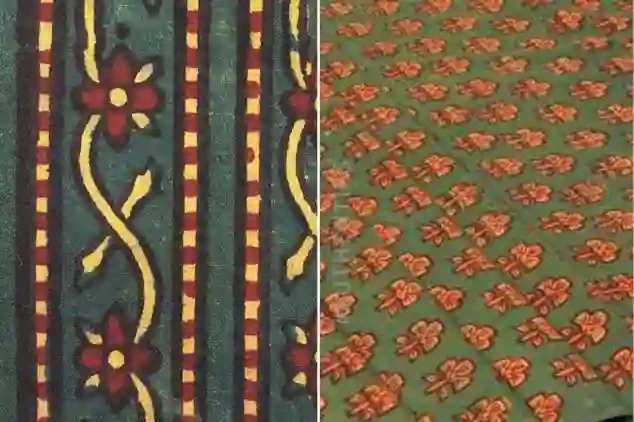
Image Courtesy: Ecofab Stories
This print is worn by the Mali community, known for their expertise in gardening, which constitutes a significant portion of this region’s economy. Mali individuals cultivate fruits, vegetables, and flowers, and their attire often features motifs depicting intertwining flowers and garlands. These motifs hold significance as offerings to gods and are also sold by the Mali community outside temples.
Genda or Marigold motif:
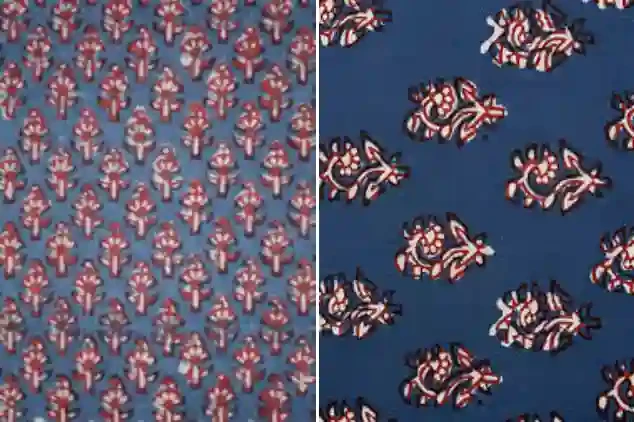
Image Courtesy: (L) Anokhi, (R) Anushka Das
These garments were worn by a middle-aged Mali woman. Marigold, the flower depicted in the motif, holds significant cultural importance as it is one of the most widely cultivated flower crops in India. It is commonly used as an offering and decoration in various life-stage rituals, including marriages and funerals, as well as in places of worship.
Chameli motif :
This motif portrays the delicate and fragrant flowers of the jasmine plant. They hold special significance in Hindu culture and are considered a sacred offering to Lord Vishnu in the form of garlands and temple votives. This particular design is exclusively worn by widows, symbolising their dedication to a life spent cultivating these delicate blossoms by hand.
Neemboli motif:
This motif illustrates the flower and fruit of the neem tree, a ubiquitous presence in Indian villages. The neem tree is highly valued for its multifaceted benefits; every part of it serves a purpose, from the twigs, which are used as toothbrushes, to the leaves, which are believed to possess healing properties. Among its many applications, neem leaves are especially prized for their effectiveness in providing relief to those afflicted with chickenpox and smallpox, often used as a soothing remedy. Sheetla Maata, considered the goddess of smallpox, is widely worshipped by the people of this region.
Mato ro Fatiya motif:
A simple and subdued motif only worn by widows is a traditional attire for the local Bhaats, village genealogists, and storytellers. It is derived from Mato, the local word for sand. Mato Ro Fatiya is also attributed to pre-construction workers preparing the foundation for simple village houses.
Babooliya motif:
This motif depicts the Babul tree, also known as Acacia Arabica Indica, a common sight in the desert region. This tree serves various purposes: its leaves are utilised as fodder for animals, its wood is used for charcoal production, and its bark and pods possess medicinal properties. Additionally, the resinous gum extracted from the tree is employed by block printers as a binding agent for mordants or colours. Traditionally, women wearing this print are identified as widows, although they may belong to any tribe within the community.
Rabari ro fatiya motif:
This motif is intricately tied to the Rabari’s regional groups and subgroups, determined by their family’s place of origin. Within the Rabari community, distinct visual identities persist, often decipherable only by fellow Rabari. This subtle motif is exclusively worn by widows and is said to be specific to the Rabari of Ajmer district.
Goonda motif:
This motif draws inspiration from the widely used yellow berries for making chutney, known locally as “gonda” or Cordia myxa. The design features a striped pattern with intertwining plant motifs. These motifs are worn by married women belonging to the Chaudhary and Jat communities, which historically held roles as local petty lenders and landlords. Skirts with this design are typically longer, reaching ankle length. Women from these communities are usually not involved in fieldwork, reflecting their focus on homemaking skills.
Gul motif:
Gul Buta is a print characterised by its sombre and sophisticated appearance. This design is exclusively used by the Jain community residing in the Sirohi district around Mount Abu. The “Gul” motif depicts the local highly scented rose flower, Rosa Damascena.
Laung motif :
This motif, traditionally embraced by all tribes, is avoided by widows. It showcases the dried, unopened flower buds of the clove, locally referred to as “laung” or “long.” Considered auspicious during weddings, the clove also holds various local medicinal and culinary uses. For instance, cloves are added to dishes, and clove oil is applied to alleviate toothaches.
Methi motif:
The methi motif portrays the leaves of the locally cultivated methi or fenugreek plant. Methi seeds are highly valued as a culinary spice, while the fresh leaves are cooked as greens and the seed oils are extracted for their medicinal and aromatic properties. Traditionally, this design is worn by widows across all tribes.
Mobaro Fatiya motif:
This design is specifically associated with the women of the Meghwal community, known for their expertise in handloom weaving of coarse cotton cloth, which was traditionally utilised for printing these designs. Renowned for their peaceful nature, members of this tribe are also recognised for their unique embroidery techniques and heavy silver jewelry. The Mobiyara motif mirrors a ripe cotton ball, signifying their mastery of the loom craft.
Borhiya motif:
This motif is commonly found adorning the garments of the potter community. The potter community often wears a slim striped pattern featuring tiny red Bor fruit, a wild berry abundant in the harsh climates of these districts. It is believed that consuming this fruit helps alleviate thirst. Additionally, the Bor fruit is represented by small silver ball-shaped ornaments worn on women’s foreheads. Therefore, this motif is not worn by widows.
Trifuli motif:
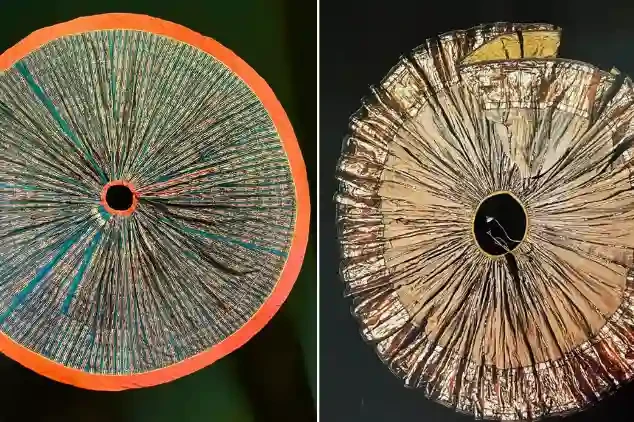
Image Courtesy: Anokhi Museum (L), (R) Costumes and Textiles of Royal India by Ritu Kumar
This motif, called Trifuli, portrays a three-petaled flower and is exclusively worn by young girls before marriage. It’s an enlarged and simplified version of the traditional Bagru-Nargis print. This represents a delicate, sweetly fragranced, short-lived flower that blooms in spring, symbolising the ephemeral beauty of youth. Trifuli, derived from Nargis, also graces numerous historical courtly prints from Sanganer.
Kuttaar motif:
The Kuttaar motif, widely observed across the region among various communities, translates to a small punch or digger. This print is commonly worn by tribes. According to tales, this motif was traditionally associated with the Gadhiya Lohar community, the blacksmiths responsible for crafting court weapons. Interestingly, this motif is also found in other regions of India and is sometimes interpreted as Lord Shiva’s Trident.
Role of Colours in Rajasthani Textiles:
According to oral tradition spanning over 150 years, the area near Jodhpur predominantly utilised shades of red and yellow in their textile prints. India’s indigenous red dye plants could yield a spectrum of hues, ranging from oranges and reds to purples and browns, potentially growing wild in the fertile soils of the Barmer district. The historical scarcity of blues and greens in local prints might have stemmed from irregular access to raw materials. External supplies would likely have been limited, sporadic, and dependent on merchants and seasonal migrations of nomadic tribes trading goods gathered during their travels for locally printed fabrics.
Natural indigo supplies likely came from further south or west, where indigo was cultivated seasonally. Similar designs were produced by local printers in Pipad, Akola, and even Deesa across the border into Gujarat. These areas also produced specific prints worn by nomadic groups like the Rabari and Banjara, whose migratory routes covered the region south of Jodhpur. The gradual inclusion of indigo into the colour palette can be inferred from a long history of skilled indigo dying, possibly related to the complex printing work that existed to the west of Barmer and in Sindh, as well as further south in Kutch.
Evolving Role of Traditional Dress in Modern Rajasthan
As with all parts of the modern world, village women in Rajasthan are no longer bound by traditional dress codes. The influence of television, Bollywood, and advertising has penetrated even the remotest corners of the desert, catalysing rapid social change. In the early 1980s, when India’s population was about 700 million and roughly three-quarters of it lived in villages, these areas were largely insulated from external media influences. However, as villages modernise and gain access to services once limited to urban areas, their desires and lifestyles are evolving.
Television, once considered a luxury, has become a perceived necessity in the past 20 years. Indian villages have been thrust into the electronic information age, and communities that were once defined by their own oral traditions are now being shaped by modern external media. This shift is particularly noticeable among the younger generation, who are aspiring for upward mobility and are increasingly influenced by the media they consume.
This influence is most noticeable in approaches to clothes, concepts of beauty, and the commitment to modern lifestyles. These days, in Rajasthan, it is generally the old woman who retains the true form of traditional dress code, while the younger generation chooses new ways of expressing their social status and identity.
As caste distinctions fade and social and political boundaries blur, the need for community identification diminishes. Individuals and communities are increasingly assimilating into the complexities of the modern world, where time brings change and greater freedom of expression, especially for women. With access to a wide range of fashion and clothing options, aspirations shift, and the influence of the globalised urban lifestyle offers a sense of anonymity from rural affiliations.
Frequently Asked Questions
Q: What do women in Rajasthan traditionally wear?
A: The ghagra (skirt), the choli or kanchli (bodice) and the odhani (veil), usually in bright hand-block-printed cotton; elite women wear the finer lehenga.
Q: What is the Rajasthani turban called?
A: The safa, pagri or paag. Its colour, size and knot vary by caste, region, season and occasion, and it is said the style changes roughly every 15 kilometres.
Q: What do the motifs and colours on Rajasthani dress mean?
A: Hand-block-printed motifs and border colours act as a visual language, marking a wearer’s community, occupation, marital status and life stage; for example, a red border marks a married woman.
Q: Is traditional Rajasthani dress still worn today?
A: Yes, especially by older women and at festivals and weddings, though younger generations increasingly mix it with modern clothing.
Fascinated by textiles, craft and dress? You can study the field formally: explore B.Des Fashion Design at UDIT.
About the Author:
Anushka Das is a textile-design expert and a Textile Design graduate of NIFT, New Delhi, with over 15 years in the textile and fashion industry. She has worked as Head Designer alongside Ritu Kumar and Neeru Kumar, leading collections for domestic and international clients, and in 2010 founded her own label, Anushka-Annasuya, which fuses Indian craft with contemporary design. Her work spans collaborations with Fabindia, Jaypore and Ajio across apparel and home; the Anzen and Fiori fabric-mask ranges she co-designed during the pandemic to support handloom weavers; and projects with the Ministry of Textiles and craft-focused NGOs. A committed advocate of sustainability, she works to a zero-waste philosophy and serves as a jury member and consultant, integrating traditional crafts into modern life.
More things to read