Article

Sukanya Bhattacharjee
13/11/2026
Overview:
The blog lists the 11 best design colleges in India for 2026. It features institutes like NIFT, UDIT (formerly IIAD), BITS Design School, Symbiosis Institute of Design and MIT ADT University, among others. These institutions offer a mix of creative education, technical skills and industry exposure across fashion, communication, interior, product and UX design. It also covers the average fee for studying design in India and the main design specialisations you can choose from.
Table of contents
- How we chose these eleven
- At a glance
- NIFT, Delhi
- University Of Design, Innovation and Technology (UDIT), Gurugram – Formerly IIAD
- NIFT, Mumbai
- NIFT, Bengaluru
- Istituto Marangoni, Mumbai
- Symbiosis Institute of Design, Pune
- MIT ADT University, Pune
- Unitedworld Institute of Design (UID), Gurugram
- ATLAS Skill Tech University, Mumbai
- Pearl Academy, New Delhi
- BITS Design School, Mumbai
- How to choose: a simple guide for Indian students
- What does a design course cost in India? (2026)
- Placements and returns: what to really expect
- Placements at UDIT (2026)
- FAQs About Design Colleges and Courses
Fuelled by social media, digital products and a growing consumer market, the design industry in India is busier than ever, creating jobs across fashion, brands, interiors, products and digital experiences. To meet this demand, Indian colleges in 2026 have widened their design courses. These programmes now include sustainability, digital tools, AI and global trends. Design colleges offer a range of qualifications, from Bachelor of Design (B.Des) and Master of Design (M.Des) degrees to diplomas and certificate courses.
However, choosing the right design college and course can make a huge impact on your career. To help you make an informed decision, we have put together a list of the 11 best design colleges in India, each known for its teaching approach and strong industry ties.
How we chose these eleven
We built this list from each college’s official sources, such as their admissions pages, fee pages and course details, and cross-checked the facts against public data in 2026. We looked at five things that matter most to an Indian student: how you get in and how hard it is, the total cost, how deep the course is, industry exposure and jobs, and the city. This guide is published by UDIT and it includes UDIT’s (formerly IIAD) own course. We are saying this openly so you can judge UDIT on the same five points as every other college.
Design in India is in a good place for students right now, helped by social media, easier access and rising demand. In 2026, courses cover far more than drawing and making. They now include sustainability, digital tools and global markets, across B.Des, M.Des and diploma programmes.
But the real choice is not which course. It is which college, how you get in, and whether you can afford it. Below is our shortlist. For each college we say plainly who it suits and where it falls short. Start with the table, then read the colleges that fit your route and budget.
At a glance
These are the full-course fees for 2026 as a rough guide. Please confirm them on official pages. The entrance route shown is the main path for B.Des.
College (City) |
Entrance route (2026) |
Rough total fee |
Best for |
NIFT, Delhi |
NIFTEE (CAT, GAT, Situation Test), exam Apr-May 2026 |
about Rs 11-13 lakh |
Students strong at exams who want the top brand |
UDIT, Gurugram (formerly IIAD) |
Through U-DAT |
about Rs 5.95 lakh a year |
Students strong at portfolio who want studio depth and London links |
NIFT, Mumbai |
NIFTEE |
about Rs 11-13 lakh |
Being close to the industry in the fashion capital |
NIFT, Bengaluru |
NIFTEE (190 B.Des seats) |
about Rs 11-13 lakh |
A better chance of a NIFT seat; tech-leaning |
Istituto Marangoni, Mumbai |
Portfolio (no institute exam) |
about Rs 11-13 lakh |
A short, intensive, global-brand route |
Symbiosis Inst. of Design, Pune |
SEED (11 Jan 2026), then studio test and interview |
about Rs 18-21 lakh |
A broad design campus with good student life |
MIT ADT (MITID), Pune |
MITID DAT (12 Apr 2026), then studio and interview |
about Rs 15-16 lakh |
A mix of design and technology, live projects |
Unitedworld (UID), Gurugram |
UID aptitude test and interview |
about Rs 24-40 lakh |
An NCR location with many design options |
ATLAS ISDI, Mumbai |
Portfolio and interview |
about Rs 25-30 lakh |
A global course through the Parsons tie-up |
Pearl Academy, New Delhi |
PAEE (GPT, DAT, interview and portfolio), Apr and Jun 2026 |
about Rs 31 lakh |
Tech-forward, sustainability-focused industry prep |
BITS Design School, Mumbai |
BITSDAT, UCEED or NID-DAT score, then portfolio and interview |
about Rs 31 lakh tuition, plus residence |
Product, digital and experience design with the BITS Pilani name |
1. NIFT, Delhi

National Institute of Fashion Technology (NIFT), Delhi, is the flagship campus of India’s best-known government design institute. Its four-year B.Des is offered in six disciplines: Fashion Design, Leather Design, Accessory Design, Textile Design, Knitwear Design and Fashion Communication. Students are encouraged to develop their creativity through practical learning, industry projects and internships. NIFT Delhi focuses on sustainability and equips students to understand the global impact of design and business. The B.Des here runs for four years.
Key Features
Admission: NIFTEE, the NIFT entrance exam run by NTA. It has a Creative Ability Test, a General Ability Test and a Situation Test. The 2026 exam runs in April and May, with registration from December 2025. NIFT has about 5,076 seats across all campuses in 2026. Delhi is the most competitive, with roughly 38 B.Des Fashion Design seats.
Address: NIFT Campus, Hauz Khas, Near Gulmohar Park, New Delhi 110016. Phone: +91 11 2654 2000
Verdict: The first choice if your exam prep is strong and you want the brand and alumni network. The catch is that Delhi seats are very hard to get, so keep a backup campus or college.
2. University Of Design, Innovation and Technology (UDIT), Gurugram – Formerly IIAD
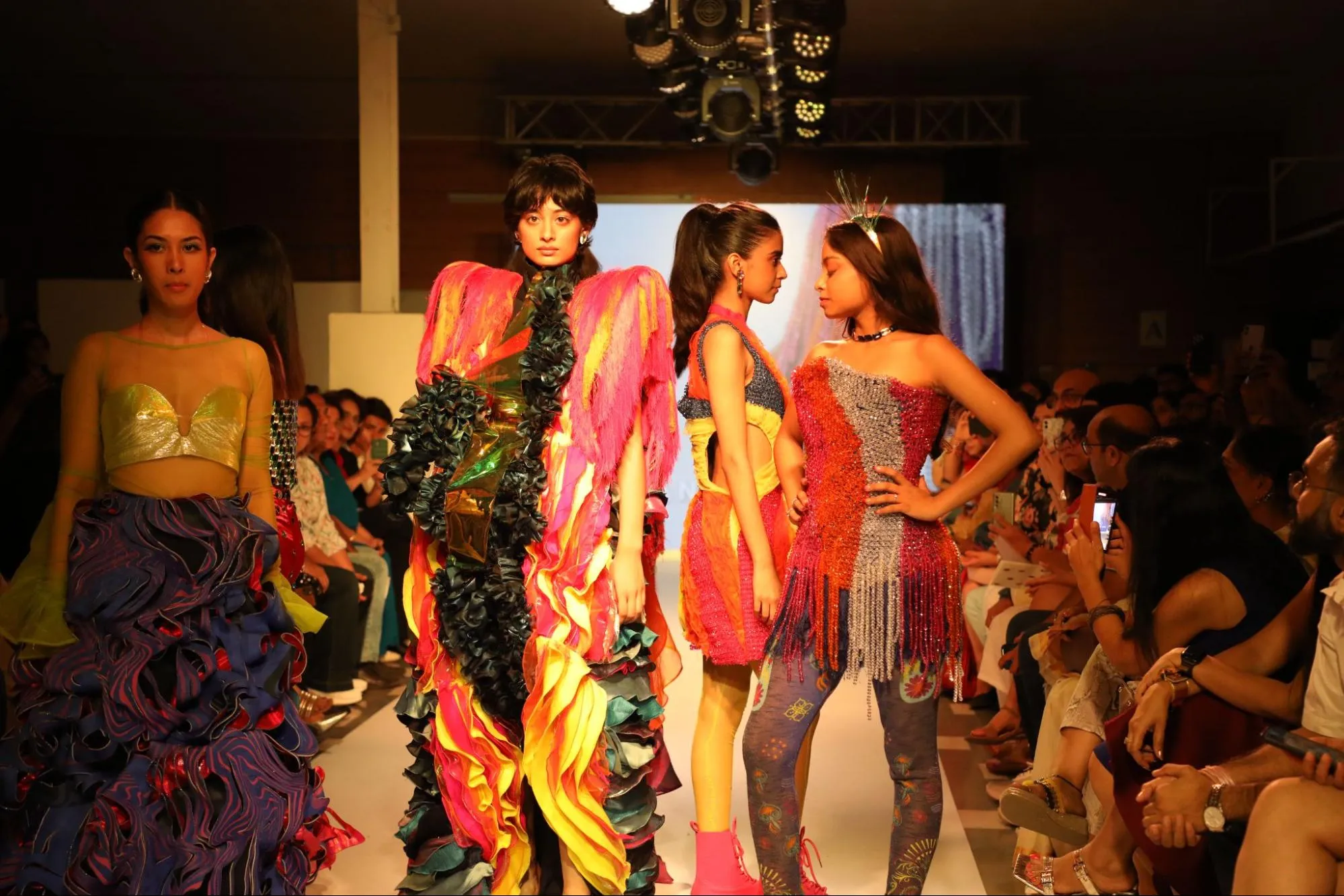
UDIT is the Gurugram design university that was earlier known as the Indian Institute of Art and Design (IIAD), set up in 2015. Its School of Design teaches fashion, visual communication, and product and interior design. You learn by making, not just sketching. In fashion, for example, you drape, cut, make patterns and construct garments from the early years, and by Year 4 you present a full graduate collection at a professional runway showcase. You also learn industry tools like Adobe Illustrator and Photoshop (and CLO 3D in fashion), and use AI as a design aid.
Every semester includes real industry work through live projects, internships, craft clusters and masterclasses. UDIT’s undergraduate design courses are four-year Bachelor of Design (Hons) degrees, made up of eight semesters.
Key Features
Admission: Apply through UDIT’s own admissions process, which includes a design aptitude assessment, an interview and a portfolio review. You need at least 50 percent in Class 12 in any stream, and merit-cum-means scholarships are available.
Address: UDIT, Sector 68, Gurugram, Haryana – 122101, Phone: +91 11 41380000, M: +91 9871383633, Email: [email protected]
Verdict: A good fit for portfolio-strong students who want a small cohort, hands-on studio depth and a craft-rooted, industry-led course. This is our own school, and we are saying so openly.
3. NIFT, Mumbai

NIFT Mumbai equips students with the skills required to work in the global fashion and lifestyle industry. Its B.Des covers Fashion Design, Accessory Design, Textile Design, Knitwear Design and Fashion Communication. Students are exposed to practical experiences through workshops, fashion shows, and internships. The curriculum also covers sustainability, design thinking, and digital technologies. The B.Des here runs for four years.
Key Features
Admission: NIFTEE, the same national process as other NIFT campuses. The 2026 exam is in April and May.
Address: NIFT Campus, Plot No. 15, Sector 4, Kharghar, Navi Mumbai – 410210, India. Phone: +91 22 2774 7000
Verdict: Choose Mumbai over Delhi if being close to the industry and getting internships matter more to you than the flagship tag.
4. NIFT, Bengaluru
NIFT Bengaluru is especially known for its focus on design, technology, and business management. Its B.Des covers Fashion Design, Accessory Design, Textile Design, Knitwear Design and Fashion Communication. The institute offers a holistic learning experience through industry partnerships, hands-on projects, and exposure to fashion weeks and exhibitions. The curriculum emphasises design innovation, sustainability, and entrepreneurship. The B.Des here runs for four years.
Key Features
Admission: NIFTEE. Bengaluru offers about 190 B.Des seats in 2026, which is a much better chance than Delhi’s roughly 38.
Address: NIFT Campus, C.A. Site No. 21, Sector 1, 27th Main Road, HSR Layout, Bengaluru 560102. Phone: +91 80 2255 2550
Verdict: The practical NIFT choice. It has far more seats, a tech-friendly city, and the same degree brand.
5. Istituto Marangoni, Mumbai
Istituto Marangoni is an Italian design school whose Mumbai centre teaches fashion, interior design, product design and visual communication design, with strong links to the international fashion and luxury industries.
In fashion, the curriculum focuses on garment construction, fabric analysis, and body proportions, while the interior, product and visual design courses build skills in space, objects and communication. Throughout the course, students learn idea development through research and are encouraged to apply critical thinking to their own design processes. The courses here run from a one-year intensive up to a three-year BA, so you can choose a shorter or longer route.
Key Features
Admission: portfolio-based. There is no institute exam, though valid test scores are preferred. Note that Mumbai runs as a training centre or school, not a full degree-granting campus.
Address: Ceejay House, Level 6, Dr. Annie Besant Road, Worli, Mumbai 400018. Phone: +91 22 6249 9999
Verdict: Best if you want a fast, global-brand way into luxury fashion or interiors and do not need a four-year Indian degree. Check exactly what qualification you get before you commit.
6. Symbiosis Institute of Design, Pune
Symbiosis Institute of Design offers its B.Des in seven specialisations: Product Design, Fashion Design, Graphic Design, Animation Film Design, User Experience Design, Fashion Communication and Interior Space Design. Students gain practical experience in every year. The programmes are guided by a team of professional faculty who mentor students on the Indian and global markets, business challenges, manufacturing processes, and marketing strategies, all while encouraging the development of individual styles. Internships, workshops, guest lectures, and industry visits are integral components of the curriculum. The B.Des here runs for four years.
Key Features
Admission: SEED, the Symbiosis Entrance Exam for Design. The 2026 B.Des exam was held on 11 January 2026, followed by a studio test and interview. SEED tests colour, geometry, visual observation, design awareness, and your awareness of Indian craft and culture.
Address: SID, S.No. 231/4A, Viman Nagar, Pune 411014, Maharashtra. Phone: 020-26557210/203
Verdict: A strong all-round campus with good student life. Pick it if you want a wide choice of design specialisations on one campus.
7. MIT ADT University, Pune

MIT Institute of Design (MITID) is known for its emphasis on technology and studio-based learning. Its B.Des specialisations include Product Design, Transportation Design, Interior Space and Furniture Design, Retail Design, Graphic Design, Animation Design, Film and Video Design, Fashion Design, Fashion Communication and Game Design. The design programme builds a strong foundation in colour theory, materials, making and research. It maintains strong industry connections through live projects, external competitions, and collaborations with industry experts. Many faculty members continue to work in industry, which keeps the curriculum close to the latest industry standards. The B.Des here runs for four years.
Key Features
Admission: MITID DAT, the design aptitude test. The 2026 test was held on 12 April 2026, with studio tests and interviews in May. It has subjective and objective sections.
Address: MIT Art, Design & Technology University, Rajbaugh, Loni Kalbhor, Solapur Highway, Pune 412201, Maharashtra. Phone: 020-26912901/02/03, +91 95951 24234
Verdict: A good fit if you want design with a strong technology and live-project focus.
8. Unitedworld Institute of Design (UID), Gurugram

The Delhi-NCR campus of UID offers a well-rounded course with modern facilities, advanced machines, and well-equipped workshops and labs. Its B.Des (Hons) streams include fashion, interior and furniture design, product design, communication design and animation, with capstone projects. The B.Des (Hons) here runs for four years.
Key Features
Admission: UID’s design aptitude test and interview. Fees vary a lot, roughly Rs 24 to 40 lakh for the full B.Des (Hons) at the Gurugram campus in 2026, which is about Rs 2.75 lakh per semester for Indian students.
Address: Unitedworld Institute of Design (UID), Delhi-NCR Campus, GD Goenka University Campus, Sohna-Gurugram Road, Sohna, Haryana 122102. Phone: +91 92666 63225
Verdict: A sensible NCR option for many design fields. But confirm which campus you are joining. Karnavati University runs UID Ahmedabad, while this Gurugram campus runs under GD Goenka University. They are different, even though they share the UID name.
9. ATLAS Skill Tech University, Mumbai
Located in Mumbai, ATLAS ISDI School of Design & Innovation runs B.Des programmes in communication design, fashion design, fashion communication and styling, interior design, product design, animation and VFX, and strategic design. ATLAS ISDI collaborates with the Parsons School of Design, bringing a global curriculum and access to renowned faculty, including leading designers, industry experts, and scholars. It instills in young designers a disruptive design mindset and a passion for emerging technologies and entrepreneurship. The course is built around masterclasses, internships, capstone projects, and guest lectures. The B.Des here runs for four years.
Key Features
Admission: portfolio and interview.
Address: ATLAS SkillTech University, Tower 1, Equinox Business Park, Off BKC, LBS Marg, Kurla West, Mumbai 400070, Maharashtra. Phone: +91 80975 20624
Verdict: Worth the higher fee if the Parsons-linked global course and Mumbai network are what you want. It is one of the pricier options here.
10. Pearl Academy, New Delhi
Pearl Academy is known for an industry-focused education that emphasises sustainable and practical design while integrating new technologies into its curriculum. Its B.Des programmes cover fashion design, fashion communication, fashion styling, textile design, interior architectural design, product design, and communication design with options in graphics, UX/UI, animation and VFX, and gaming.
A significant focus is placed on technology, with students learning to use advanced software for design, illustration, and virtual prototyping. Graduates move into roles such as fashion designer, textile designer, interior designer, product designer, UX/UI designer, graphic designer and visual merchandiser. The B.Des here runs for four years, and the M.Des for two years.
Key Features
Admission: the Pearl Academy Entrance Exam (PAEE). It has a General Proficiency Test (GPT) and a Design Aptitude Test (DAT), then an interview and portfolio. It runs in cycles in 2026, with sittings on 25-26 April and 22-23 June. You need 50% in Class 12. For 2026-27, B.Des Fashion Design works out to about Rs 31 lakh, which is roughly Rs 3.94 lakh per semester in year one, plus an admission fee of about Rs 85,000. Fees rise each year.
Address: Pearl Academy, A-21/13, Naraina Industrial Area, Phase II, Naraina, New Delhi 110028. Phone: +91 11 49807100
Verdict: A strong private option if you want tech-forward, sustainability-led industry prep and can fund the roughly Rs 31 lakh B.Des.
11. BITS Design School, Mumbai
BITS Design School (BITSDES) was set up in 2024 under BITS Pilani, on the BITS Mumbai campus near Kalyan in the Mumbai Metropolitan Region. It offers a four-year, residential Bachelor of Design (Honours) built around technology, research and industry projects, with an eight-week internship after the second year and a 20-week industry placement in the fourth year.
In the first three semesters, students explore five areas before choosing one: Physical Product Design, Digital Product Design (UI/UX), Design Research and Insights, Experience Design and Visual Design. There is no fashion design specialisation, so it suits students heading towards product, digital or experience design rather than apparel.
Key Features
Admission: a valid score in BITSDAT (the BITS Design Aptitude Test), UCEED or NID-DAT Prelims, followed by a portfolio review and an online interview. Every applicant must take BITSDAT. For 2027 entry, applications close on 31 January 2027 and BITSDAT runs from 29 March to 5 April 2027. You need at least 45% in Class 12 in any stream. First-year fees for 2027 entry are about Rs 9.97 lakh (tuition of about Rs 7.7 lakh and a residence fee of about Rs 2.27 lakh), plus a one-time admission fee of Rs 40,000. Fees may rise by up to 8% a year.
Address: BITS Design School, BITS Pilani Mumbai Campus, Pawshepada, Kalyan-Murbad Road, Kamba, Kalyan Taluka, Thane District, Maharashtra 421301. Phone: +91 70262 00300
Verdict: A strong pick if you want product, digital or experience design with the BITS Pilani name behind it and a residential, technology-led campus. The school is new, so its first batch has not graduated yet and there is no full placement record. Ask about internship outcomes before you commit.
How to choose: a simple guide for Indian students
- Start with the admission route. If your exam prep is strong, NIFT gives the best value for the brand, and Bengaluru gives you the best odds. If you are strong at portfolio but not at exams, UDIT, ATLAS ISDI and Istituto Marangoni suit you better.
- Then look at your budget honestly. Government-backed NIFT (about Rs 11 to 13 lakh) is far cheaper than the Rs 24 to 40 lakh private colleges like Pearl, ATLAS and UID. Count city living costs and hostel fees, not just tuition.
- Then check how deep the course goes. Want the widest choice of specialisations on one campus? Choose Symbiosis or MITID. Want design plus technology? Choose MITID or BITS Design School. Want a fast, global luxury route? Choose Marangoni.
- Then look at jobs. Ask each college for its own placement report and median salary in writing, not just the highest package in the brochure.
- Then think about the city. Delhi, Mumbai, Pune and NCR open different doors for internships and work. Being close to where you want to work matters more than most students think.
What does a design course cost in India? (2026)
Here are rough full-course fees. Please confirm the current figure on each college’s official page.
- Diploma in Design: about Rs 9 to 10 lakh
- B.Des: about Rs 13 to 20 lakh at mid-range colleges, rising to Rs 24 to 40 lakh or more at premium private colleges
- M.Des: about Rs 7.5 to 11 lakh
Placements and returns: what to really expect
At NIFT, jobs in design fields (Fashion, Textile and Communication) pay about Rs 7 lakh a year on average. The average for undergraduates is near Rs 4.5 lakh, and for postgraduates near Rs 5.7 lakh. The highest packages at top campuses run from Rs 12 to 17 lakh a year, and recent B.Des placement rates have been close to 99%. Private colleges vary a lot, so do not trust a single highest-package figure. Always ask for the median and the share of students placed.
Placements at UDIT (2026)
Out of the total students who opted for placement in UDIT’s 2026 B.Des batch, around 40% were placed by July 2026, soon after the course finished in May. The median starting salary was Rs 6 lakh a year, and the highest package was Rs 9 lakh. Recruiters included Pantaloons, boAt, Mars Cosmetics, Kingsman India and CP Kukreja.
A few recent examples: Helen Shilbi joined salescode.ai as a Motion Graphic Designer; Diya Saini joined Banjara Trail as a Brand Management and PR Executive; Vanshika Gulati joined Warehouse by Mudita as a PR, Marketing and Media Associate; and Muskan Kaur joined Pantaloons as a Store Visual Merchandiser.
FAQs About Design Colleges and Courses
1. Which entrance exams do design colleges use in 2026?
NIFT campuses use NIFTEE (exam in April and May 2026). Symbiosis uses SEED (B.Des sitting on 11 January 2026). MITID uses the MITID DAT (12 April 2026). Pearl uses the PAEE (GPT and DAT, with April and June 2026 cycles). UDIT has the U-DAT entrance exam. BITS Design School accepts BITSDAT, UCEED or NID DAT Prelims scores, and every applicant takes BITSDAT. ATLAS ISDI and Istituto Marangoni use portfolio and interview.
2. What is the average fee for studying design in India?
Roughly Rs 9 to 10 lakh for a diploma, Rs 13 to 20 lakh for a B.Des at mid-range colleges (up to Rs 24 to 40 lakh at premium private colleges), and Rs 7.5 to 11 lakh for an M.Des.
3. What specialisations are available in design courses?
Design courses in India offer several specialisations, including:
- Communication and Graphic Design: Focuses on branding, typography, illustration and visual storytelling
- Fashion Design: Covers apparel, textiles, styling and accessories
- Interior and Spatial Design: Centres on homes, workplaces, retail spaces and furniture
- Product Design: Involves designing physical objects, from furniture to consumer electronics
- UX and Interaction Design: Covers apps, websites and digital services, along with user research.
4. How to become a designer?
- Earn a relevant degree
- Develop a design portfolio
- Gain practical experience through internships
- Stay updated with the market demands
- Network and promote your work on offline and online platforms
5. How to pursue a design course after 12th?
- Choose a Course
- Qualify for Entrance Exams
- Complete the Application Process
- Enrol in a Program
Choosing the right design college is a crucial first step for any aspiring design student. Your one decision can make or break your career and unlock numerous opportunities. We hope that this compilation of the best design colleges in India serves as a valuable resource, guiding you through your research and helping you identify the crucial factors to consider before making your decision.
More things to read